Reimagining Columbus
Columbus, Ohio
WHY
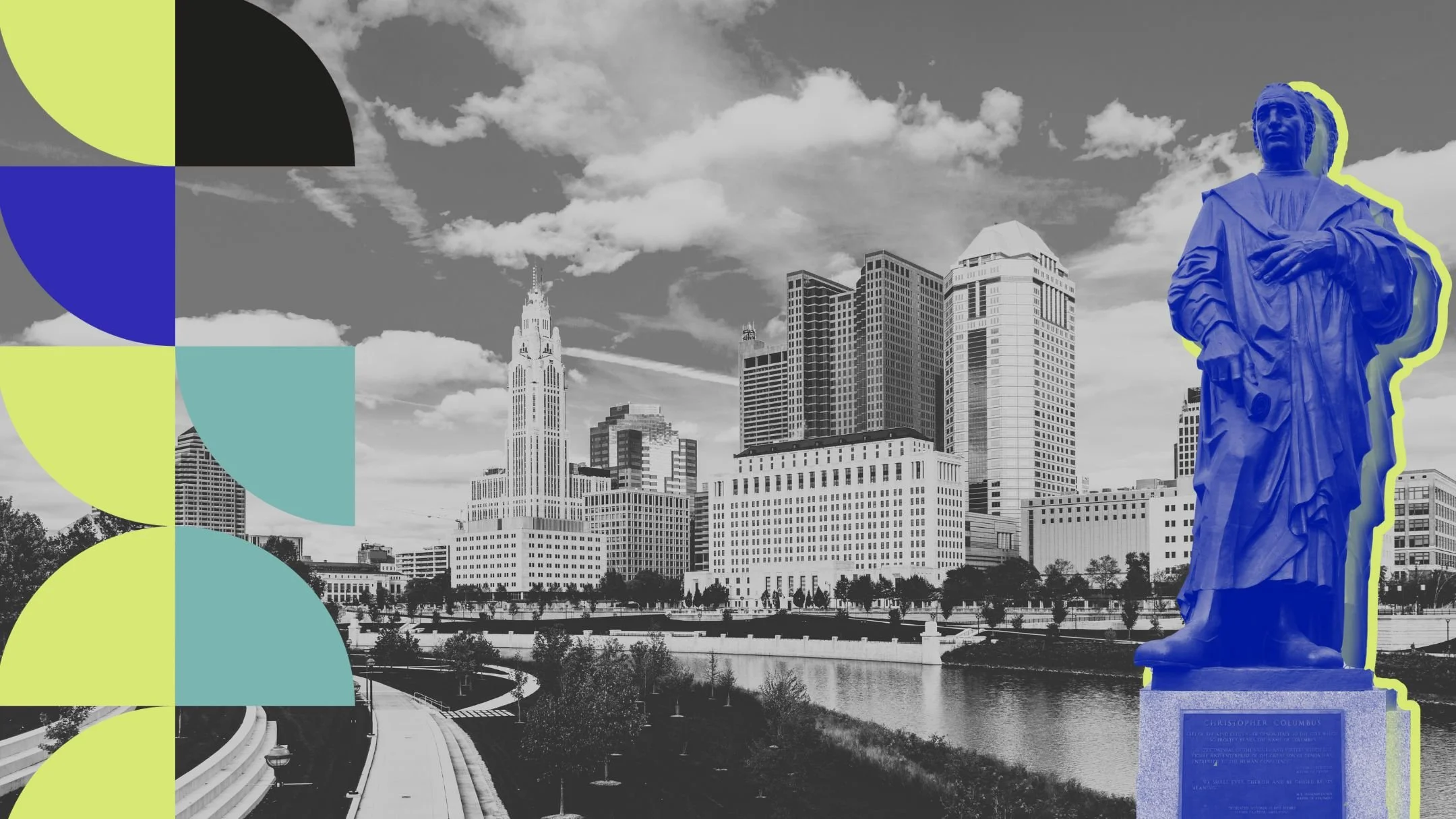
In the turbulent summer of 2020, when protests erupted over police brutality against people of color and controversial statues were being toppled and defaced nationwide, the City of Columbus preemptively removed its Christopher Columbus statue from the steps of City Hall. With the statue in storage, the City of Columbus partnered with Designing Local in 2023 to seek funding from the Mellon Foundation for “Reimagining Columbus,” a 2-year research, community engagement, and design process to reckon with the statue and imagine a future in which truths about its subject are more accurately conveyed. The proposal was awarded $2 million and Designing Local was tasked with managing the project.
HOW
Designing Local managed a multi-disciplinary team to undertake the following:
RESEARCH & LEARNING. In order to confidently recommend a course of action regarding the City of Columbus’ Christopher Columbus statue, the Reimagining Columbus project team felt it was important to be grounded in truths about the explorer and his legacies, particularly those within Columbus, Ohio. Learnings from subject matter experts, museums and site tours, original research, community conversations, and arts and culture colleagues nationwide were used to educate the public and inform project deliverables.
COMMUNITY ENGAGEMENT. In recognition that conversations about the Columbus statue would challenge participants — particularly those from the city’s Indigenous, Italian-American, and Black communities — the Reimagining Columbus engagement team planned a process that would accommodate their emotions about it but also forge a collective path forward. The team’s approach to this conversation utilized a customized, emotional safety–oriented methodology centered on Sankofa, the Ghanan idea that progress requires applying lessons from the past, to encourage more courageous sharing and evoke personal histories that could be influencing present-day perceptions. Large group and affinity group conversations, community events, and written feedback were employed in various ways throughout the process.
DESIGN. The project’s design team worked to translate the learnings from research and community engagement into a design concept for a possible new Christopher Columbus statue placement. The team relied on Indigenous design principles to guide their vision for an immersive experience of nature and community togetherness at which visitors could experience the statue (or not), but also learn, play, restore themselves, and heal.
WHAT
Designing Local delivered the following Reimagining Columbus project outcomes:
A website and StoryMap timeline, 2 research papers, 35 videos with more than 20 hours of educational content, and several in-person community learning exchanges provided context regarding Christopher Columbus, the statue of his likeness and public perceptions of it, and the city’s relationship with its namesake.
More than 20 community events and affinity group conversations elicited rich, layered feedback to help inform the design process.
Conceptual designs of a new space in which to display and contextualize the statue, based on Indigenous design principles, translated research and community feedback into physical elements that could tell the story of Columbus — the city and the man — and help all visitors experience emotional safety in the space. So expansive did this vision become that the city, the Reimagining Columbus project team, and community members were inspired to embrace it as a generational vision for an altogether new type of public space in the city.
An art plan for City Hall campus suggested how new art could refresh and enliven this uninspiring civic space and ensure that it celebrates all city residents.
View the Project Outcomes Here
Park City // Summit County Arts & Culture Master Plan
Park City // Summit County, Utah
WHY
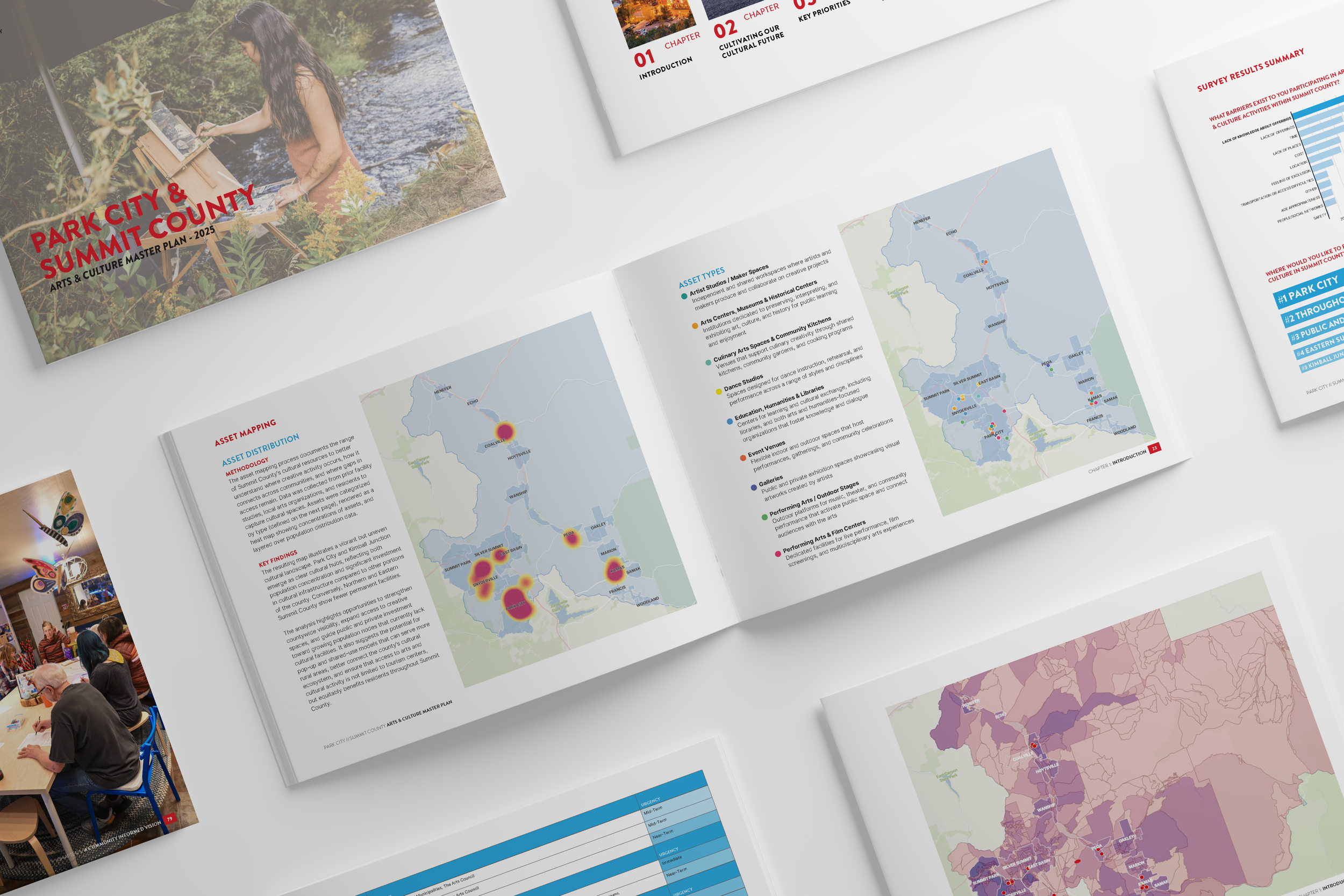
The foundations of this Arts & Culture Master Plan emerge from a deep understanding of Summit County’s creative landscape—its history, its current conditions, and the aspirations voiced by residents, artists, and cultural leaders. Through comprehensive planning assessment, data analysis and asset mapping, peer benchmarking, and community engagement, a clear picture comes into focus: Summit County is a community rich in cultural assets yet marked by uneven access, constrained capacity, and untapped potential. These foundational insights ground the plan’s vision and directly shape the strategies and key priorities that chart a roadmap toward a more connected, equitable, and resilient cultural ecosystem for all.
HOW
The Park City // Summit County Arts & Culture Master Plan is grounded in a comprehensive assessment of the county’s cultural ecosystem, combining asset mapping, benchmarking, data analysis, and targeted community engagement to understand both strengths and structural gaps. The planning process revealed a region rich in cultural legacy and economic impact, yet constrained by uneven geographic access, fragmented leadership, limited infrastructure, and a lack of coordinated funding and implementation capacity. These findings shaped a clear, evidence-based framework for action rather than a purely aspirational vision.
WHAT
Building on prior efforts such as Project ABC (Arts, Beauty, Culture) and the Sustainable Tourism Plan, the Master Plan establishes a strategic roadmap to strengthen arts and culture countywide through coordinated leadership, diversified funding, equitable distribution of facilities and programming, and long-term cultural infrastructure investment. The plan emphasizes practical mechanisms—such as expanded public art planning, artist housing and workspace strategies, cultural district development, and cross-sector partnerships—to support sustainable growth and community identity. By aligning cultural planning with tourism, economic development, and placemaking, the plan provides a phased, implementable guide to ensure arts and culture remain integral to Summit County’s social, economic, and physical vitality.
Brunswick Parks & Recreation Master Plan
Brunswick, Ohio
WHY
When the City of Brunswick, Ohio emerged from a period of financial hardship to resume investing in community amenities, fiscally conservative city leaders wanted to ensure these investments would target their constituents' highest priorities. Their goal with the city's first-ever Parks & Recreation Master Plan was to understand what community members wanted from their parks system and develop a responsible, measured approach to delivering it.
HOW
To ascertain Brunswick residents' parks-related needs and preferences, Designing Local conducted 17 stakeholder interviews, held 2 open house events, and offered an online survey to which almost 1,400 responded. Zec Eight Insights was enlisted in the planning process to conduct a benchmarking analysis that compared Brunswick's parks system with others of a similar size nationwide; Envision Group prepared a fiscal analysis and implementation plan to facilitate each recommendation.
WHAT
Brunswick's City Council discussed the plan in early 2025; at the same meeting, they recommended dedicating $1.2 million from the city budget to implement its recommendations.
Racine Riverfront Revitalization
Racine, Ohio
WHY
The Village of Racine seeks to revitalize their downtown area with riverfront access, improved walkability, and outdoor community gathering places. Racine leadership has sought for many years to increase access to their riverfront, but been stymied by regulations that restrict building along the Ohio River, and the expense of accommodating them.
HOW
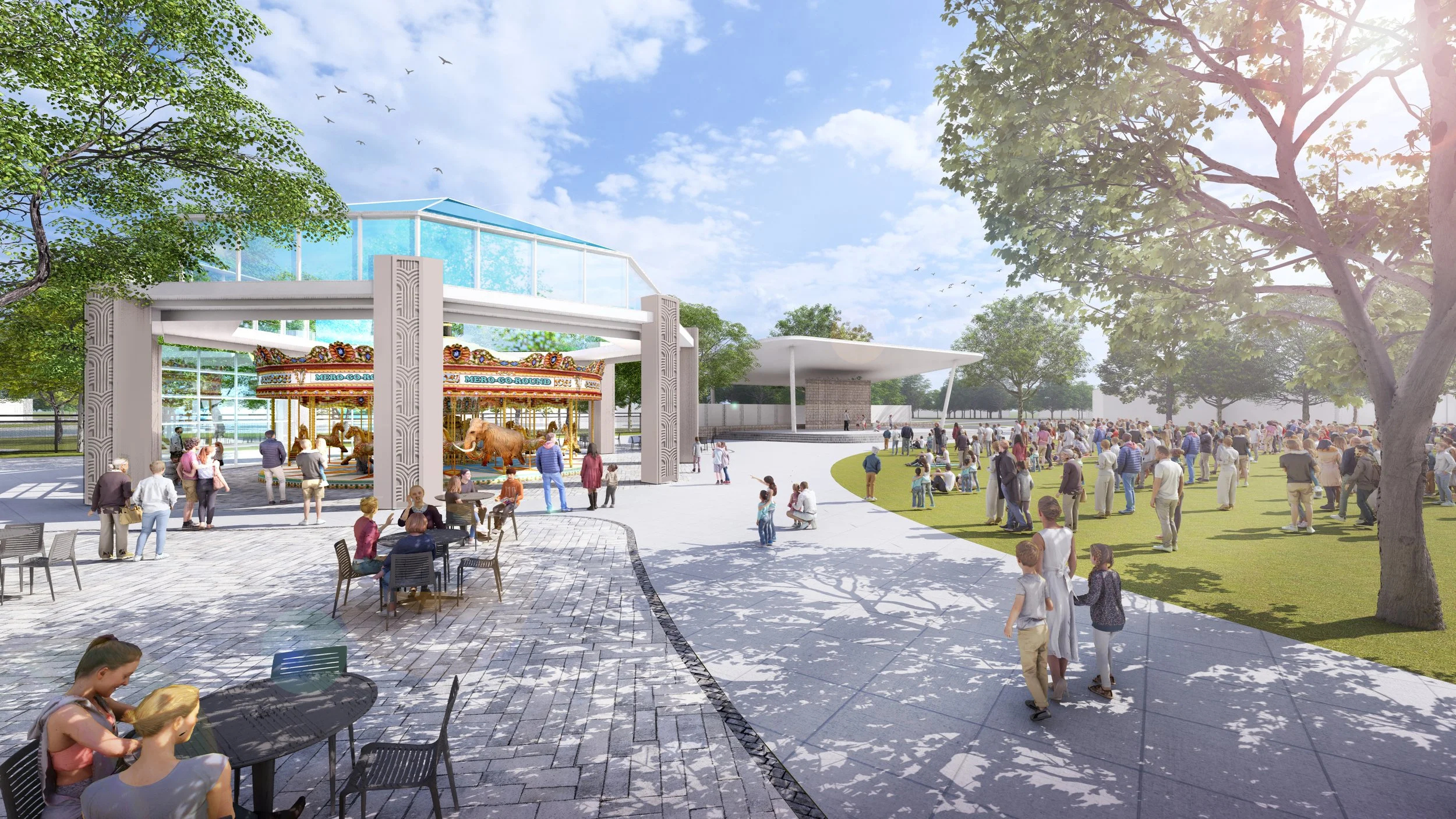
The focus of this project is to create riverfront access at Star Mill Park that includes walking paths (connecting the riverfront park to the Cross Building a short distance away), a community amphitheater, a recreational boat dock and kayak launch. It further includes streetscape improvements along 3rd and Pearl Streets to facilitate the creation of an outdoor business district, the focal point of which will be a pavilion for farmer’s markets and musical performances, among other community events.
WHAT
This project will provide Racine citizens with opportunities for outdoor wellness activities, including walking and a farmer’s market, that promote active lifestyles and social interaction. The project is currently in design.
Central Ohio Greenways Wayfinding Strategy Guide
Central Ohio
WHY
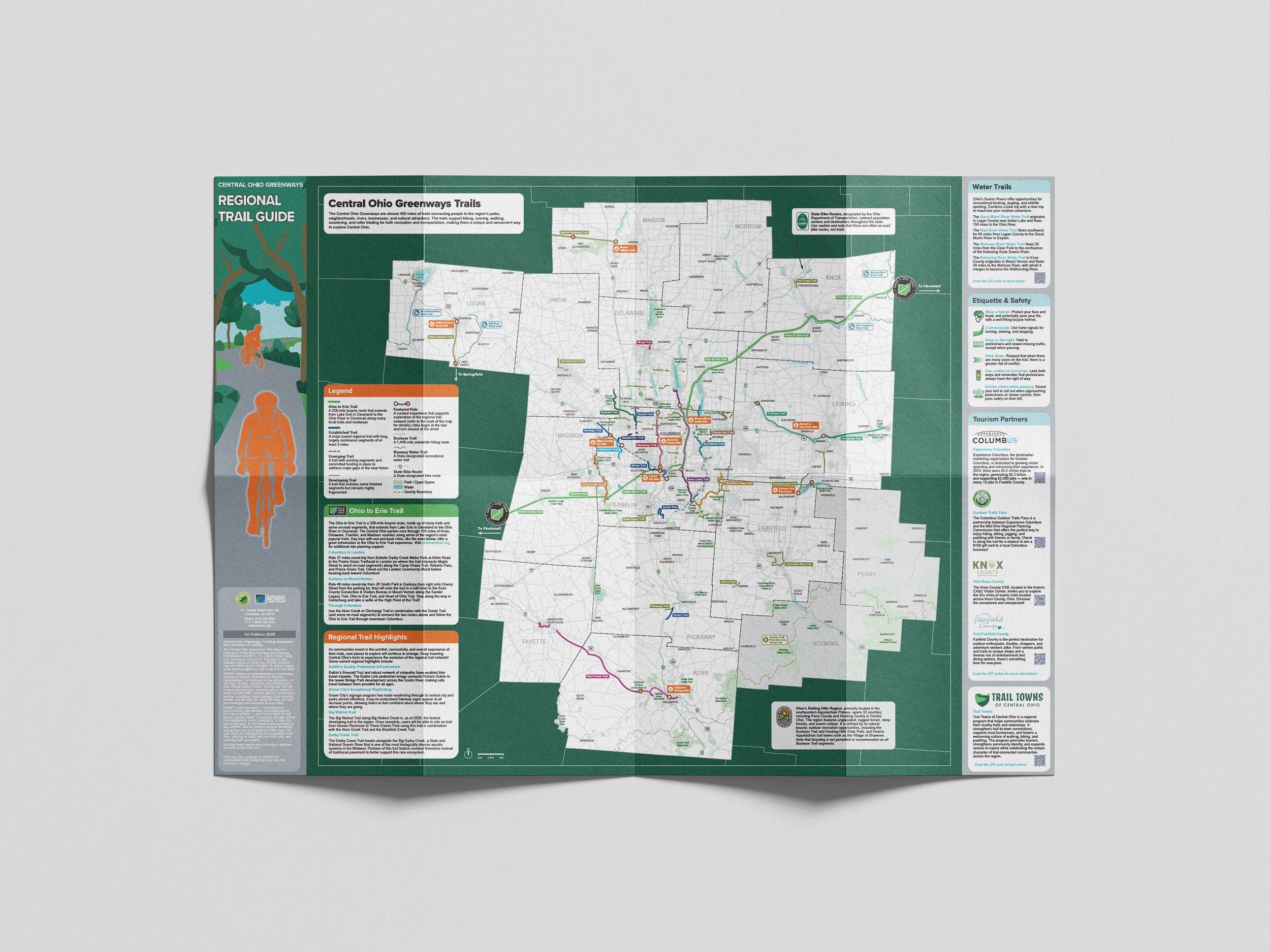
To accommodate the massive population growth expected in Central Ohio through 2050, the Central Ohio Greenways (COG) Board has committed to adding more than 500 miles of trails to its network. The Board has invested in professionally designed wayfinding signs and brand standards, but recognized a need to go further with its wayfinding strategy as it welcomes an influx of newcomers to the trails.
HOW
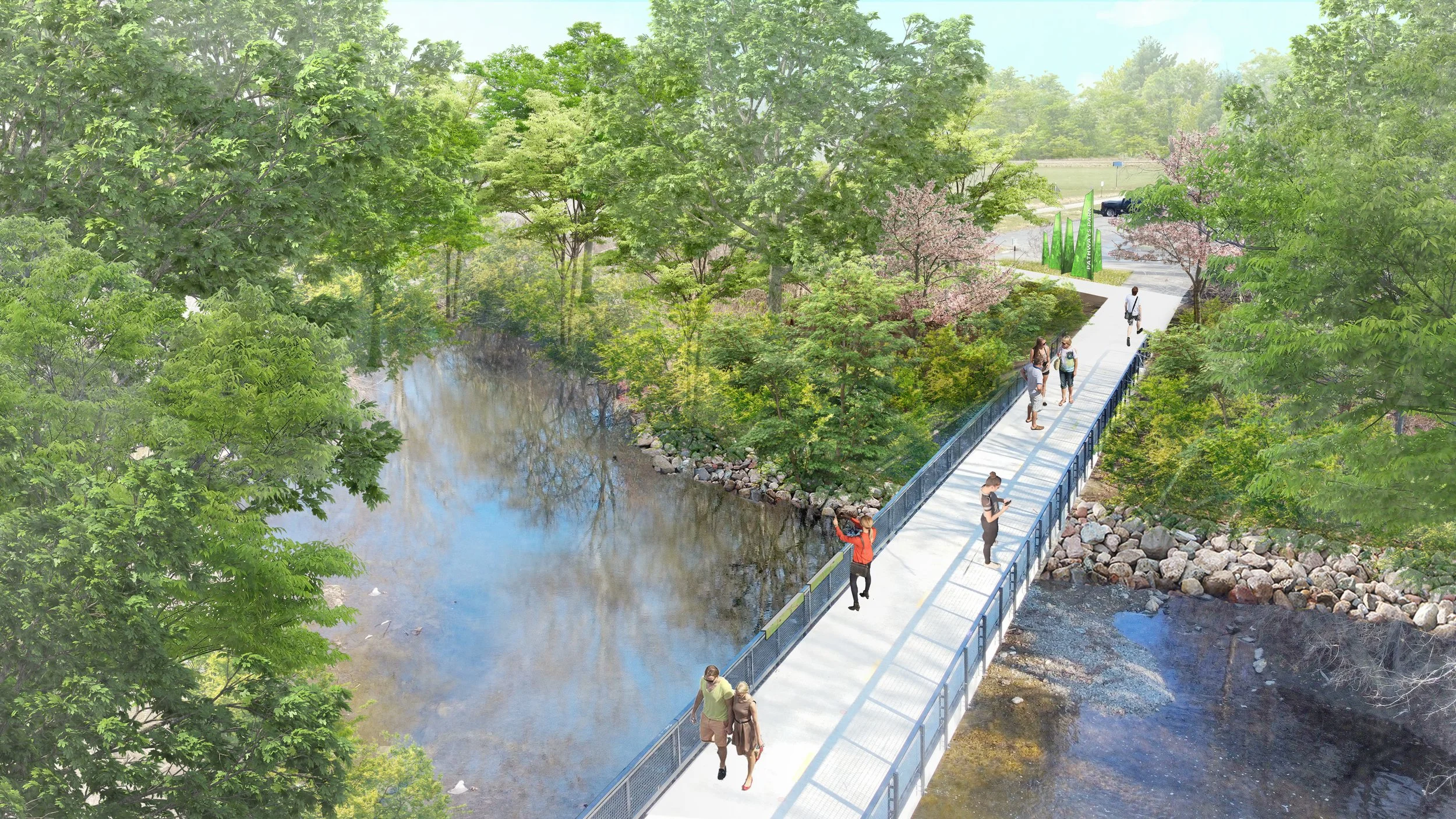
The COG Board selected for this project a segment of the Ohio to Erie Trail that runs through Madison County, Franklin County, Delaware County, and Knox County in Central Ohio. The intention is that the wayfinding strategy developed for this trail segment will be employed throughout the COG network and serve as a model for regional trail wayfinding across Ohio.
WHAT
The Central Ohio Greenways Wayfinding Strategy Guide will honor the wayfinding investments communities have already made and provide additional strategies to make Central Ohio’s trails as easy to navigate as our roadways.