Greater Lafayette Regional Arts & Culture Strategy
Benton, Carroll, Fountain, Montgomery, Tippecanoe, Warren, and White counties
WHY
The Greater Lafayette READI Region is home to a vibrant, accessible, and inclusive arts and culture ecosystem. In all corners of the region, the arts economically enrich communities while strengthening relationships and enhancing personal well-being. The goals of this plan aim to increase the visibility of arts and culture resources and opportunities; connect communities through arts and culture; develop arts and culture programs that are accessible and inclusive to all; and foster and leverage local arts and culture amenities.
The Greater Lafayette READI Region is made up of seven counties in West Central Indiana: Benton, Carroll, Fountain, Montgomery, Tippecanoe, Warren, and White. The Wabash River cuts through the middle of the region, creating many opportunities for dynamic waterfront developments. The region varies dramatically in population, containing both one of the largest counties by population in Indiana (Tippecanoe) and two of the smallest (Benton and Warren). Much of the region is rural with an agricultural landscape, with the exception of the cities of Lafayette and West Lafayette, though other small towns and communities provide more localized centers for arts and culture for residents.
HOW
Throughout the planning process, engagement was conducted to help identify and assess existing resources and gaps and provide a foundation for transformative projects. Methods of engagement were used to glean information from stakeholders and the general public included community workshops, stakeholder conversations and digital surveys.
WHAT
This Arts and Culture plan tenders a flexible framework, thus creating opportunities for decision-makers to pursue diverse funding sources and pivot implementation priorities to take advantage of changes and growth in the local cultural ecosystem. It also allows the community to continue to dream big, yet places emphasis on actionable, momentum-building steps for growing local arts and culture assets and tackle them as additional funding and capacity becomes available. Each objective outlined is accompanied by strategies to support the objective, timing, personnel requirements, impact, and relative impact, when appropriate. These strategies are expanded upon for each of the regional, county and facility levels.
South Bend - Elkhart Regional Partnership Arts Plan
Elkhart, Marshall, and St. Joseph counties
WHY
Our planning team developed a suite of recommendations that will take the South Bend - Elkhart region’s current arts and culture landscape forward, from great to exceptional. Any region, county, or city can provide well-designed public spaces, or purposeful facilities, but a region that is seeking uncompromising, world-class experiences must also consider how these spaces will elevate its ways of thinking, working, and engaging in order to enrich the larger community’s cultural fabric. The region has all of the right ingredients to sustain its current arts and culture landscape, but this plan will enable the region to thrive.
With so many resources and so much functioning smoothly in the region, funders might overlook the South Bend - Elkhart region and instead distribute support to regions whose arts and culture landscape is not as well-stewarded. But with the region at the precipice of greatness, after decades of rebuilding and reconnecting with its heart and soul, this place is steps away from fully realizing its journey to become a thriving destination to live, work, play and grow.
HOW
The South Bend - Elkhart region is made up of Elkhart, Marshall, and St. Joseph counties, all of which have similar land areas, though their populations vary significantly. While much of the rural landscape is agricultural, many downtown areas provide hubs of arts and culture for residents in and around those areas. This plan was shaped by many communities and reveals a collective vision for regional growth through arts and culture experiences and economic activity. In order to fully execute the vision and goals of this plan, many organizations will need to work together across the region in various capacities. This plan provides a comprehensive guide to how regional, county, and local agencies and organizations will support the full potential of the South Bend - Elkhart regional arts and culture plan.
WHAT
The South Bend - Elkhart Regional Arts and Culture Plan goes beyond the surface to showcase the region’s capacity to be a national leader in the arts and culture landscape. This plan provides ample information about the region’s prime geographic location, its world-class arts and culture organizations, and its remarkable physical assets and facilities; beyond that, many individual organizations can provide ample data about its respective economic impact, outreach, visitor ship, engagement, and beyond.
While this plan primarily reflects a unique set of technical recommendations and strategies for the region to act upon, it does so with a tailored understanding of the region’s tenacious character, commitment to excellence every day, and attitude that nothing is impossible when the community comes together.
Wabash River Region Arts & Culture Plan
Clay, Parks, Sullivan, Vermillion, and Vigo Counties, Indiana
WHY
The Wabash River region is made up of five counties in western Indiana on its Illinois border: Clay, Parks, Sullivan, Vermillion, and Vigo. The Wabash River cuts through the region from north to the south, providing dynamic and thriving waterfronts across both rural and urban areas, with many opportunities for investment and expansion. While much of the rural landscape is agricultural and forested, many downtown areas provide hubs of arts and culture for residents in and around those areas. The region is home to an exciting and deeply collaborative arts community. Together, they will cultivate compelling destinations for public art and diverse cultural experiences, making the region a vibrant and engaging hub for arts and culture. The main goals of this plan are beautification and placemaking, community pride, health and wellness, and local investment. Targeted goals of the Regional Arts & Culture Plan include beautification and placemaking, boosting community pride, encouraging health and wellness, and investing in the community by preserving historic assets and supporting local organizations, facilities and programs.
HOW
Engagement for this process was conducted to help identify and assess existing resources and gaps and provide a foundation for transformative projects. Engagement was promoted through RDA social media and through stakeholder networks. Engagement took the form of community surveys, stakeholder conversations, and public engagement such as a focus group held at Arts Illiana with members of the 41|40 Arts & Cultural District Advisory Group, as well as two public meetings. The primary concerns gleaned from public engagement included lack of funding for arts organizations, limited performance space and opportunities to experience local cultures in community settings.
WHAT
The Wabash River Regional Arts & Culture Plan provides a flexible, proactive framework that creates opportunities for decision-makers to pursue diverse funding sources and pivot implementation priorities to take advantage of changes and growth in the local cultural ecosystem. It also allows the community to continue to dream big, yet places emphasis on actionable, momentum-building steps for growing local arts and culture assets and tackle them as additional funding and capacity becomes available. The plan details the three priority regional objectives as well as actionable steps to reach them. These objectives include strengthening the Wabash River Region arts and culture community, promote regional arts development and tourism with a focus on the 41|40 Arts & Cultural District, and increasing the visibility of arts and culture in community spaces and downtowns.
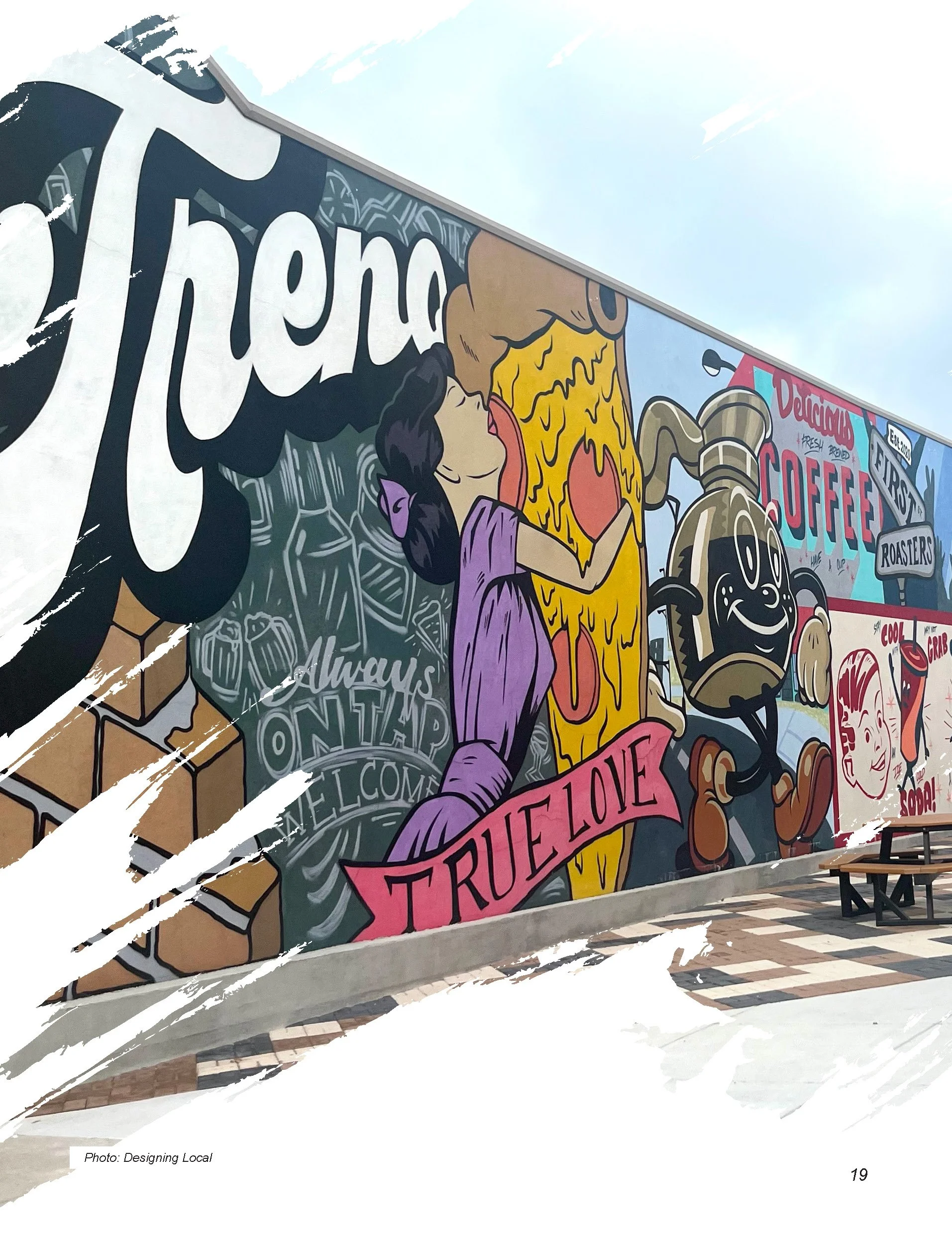
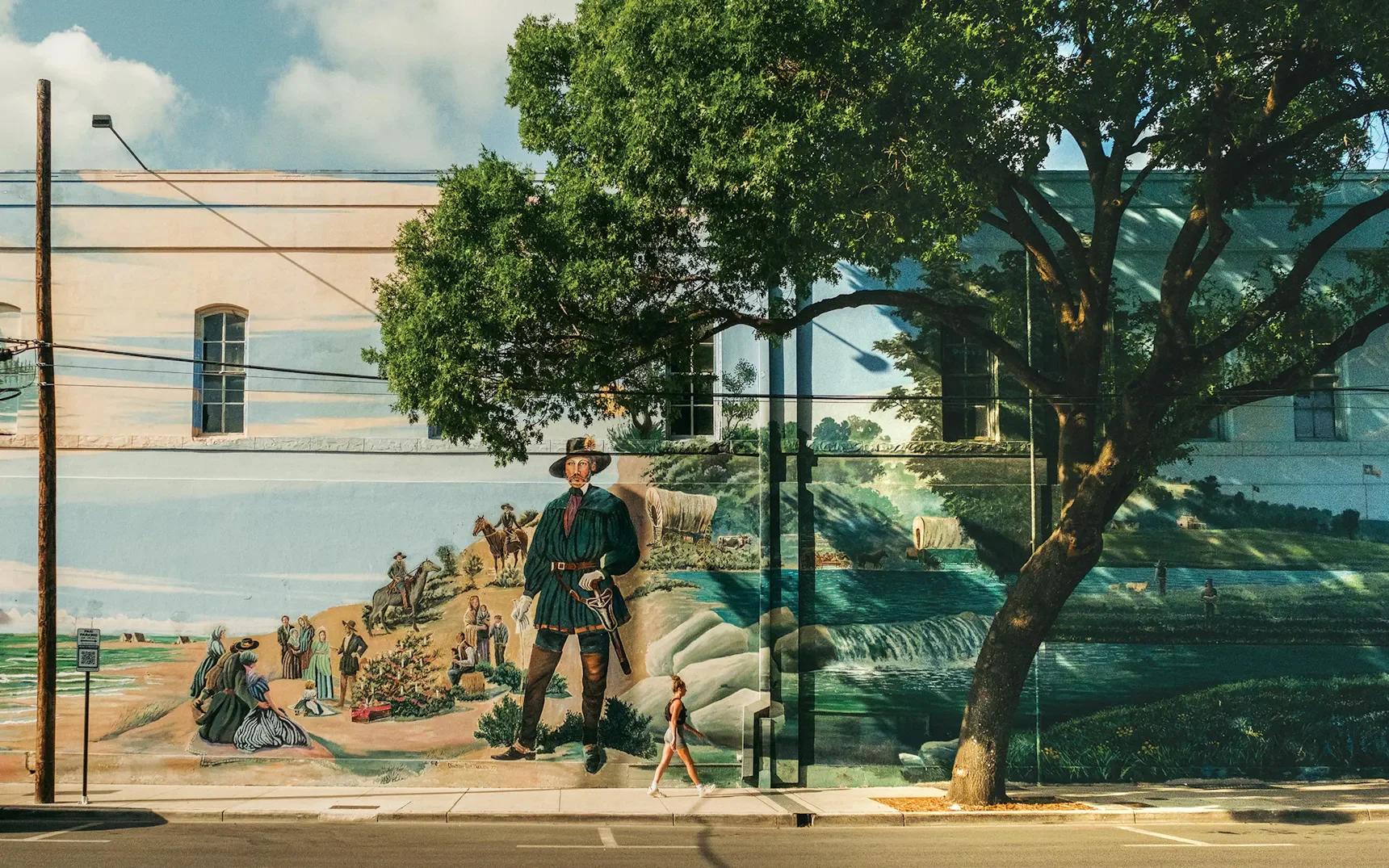
New Braunfels Arts & Culture Strategic Master Plan
New Braunfels, Texas
WHY
New Braunfels is one of the fastest-growing cities in the United States, and its cultural foundation — more than 250 years of Indigenous, German, Hispanic, and Texan heritage — is both its greatest asset and its greatest opportunity. Yet despite a rich history and genuine creative energy, the arts community has operated in fragments: organizations working in silos, artists without adequate space and resources to reach the broader community, and a cultural tourism economy that hasn’t reached far beyond river recreation and German-based heritage experiences. This plan exists because New Braunfels deserves a cultural future as distinctive as its past.
HOW
Through more than 1,200 community connection points, including public workshops, stakeholder conversations, pop-up events, and a digital survey, the planning team engaged with residents, artists, historians, educators, and city leaders to define what arts and culture mean to New Braunfels and what it would take to unlock the creative potential. That process surfaced six shared pillars for the plan: expanding creative spaces, strengthening visibility, connecting culture and tourism, encouraging collaboration, investing in belonging, and telling a cohesive story.
WHAT
This project serves as a comprehensive ten-year roadmap to bringing forth the cultural undercurrent of the community and unleashing the economic and social benefits of sustained cultural investment. This framework leverages strategic financial tools available to the City, establishes a governance framework for dedicated arts leadership, and provides policy and process guidance to support and empower cultural creators, non-profits, and creative entrepreneurs across the community.
Organized around four priority areas — Programming and Community Experiences, Places and Spaces, Visibility and Tourism, and Organizational Capacity — the plan charts short-, medium-, and long-term strategies to grow the cultural ecosystem, support the artists and organizations already doing the work, and position New Braunfels as a cultural anchor for the Texas Hill Country and a leader in arts investment.
Reimagining Columbus
Columbus, Ohio
WHY
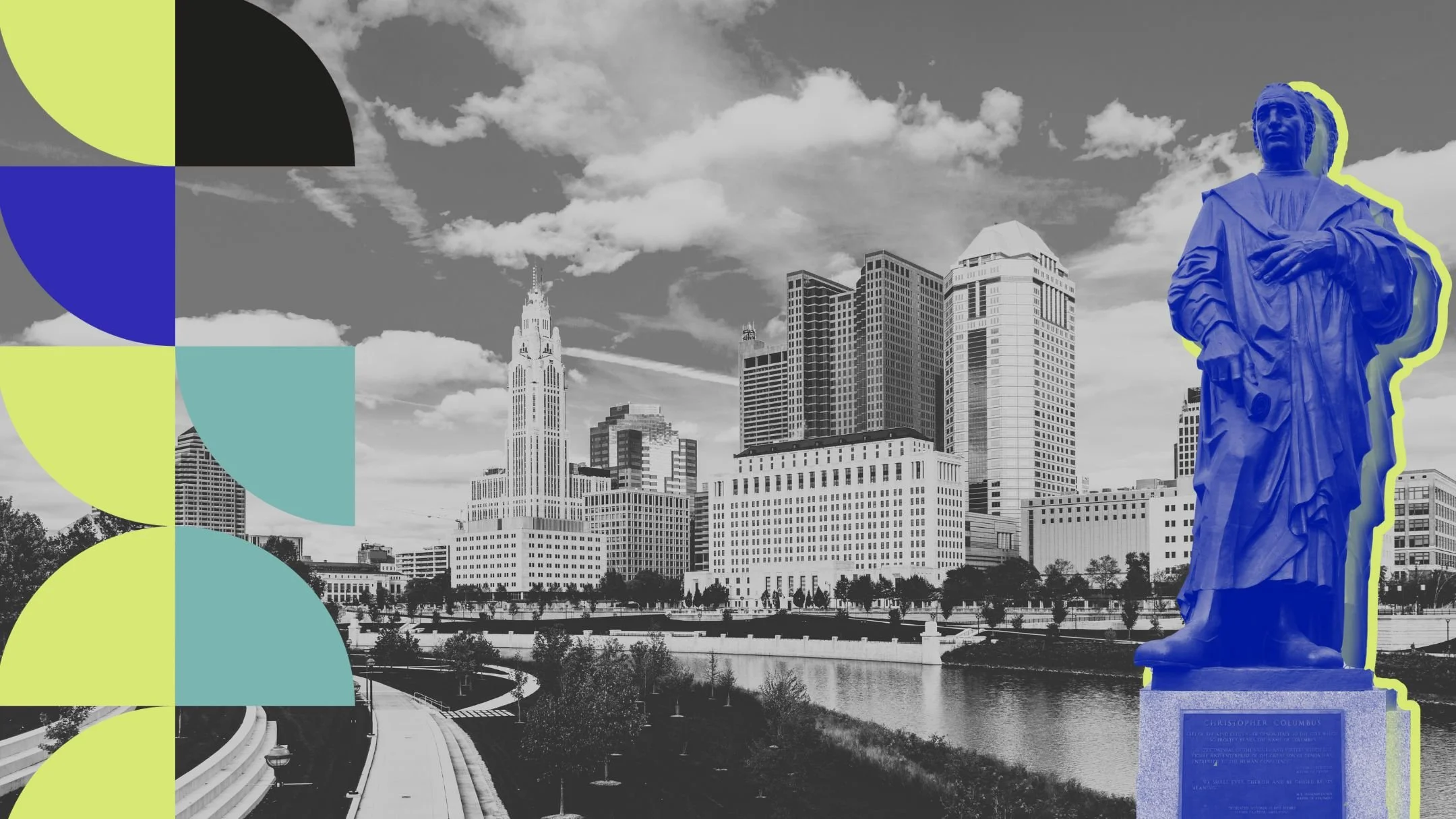
In the turbulent summer of 2020, when protests erupted over police brutality against people of color and controversial statues were being toppled and defaced nationwide, the City of Columbus preemptively removed its Christopher Columbus statue from the steps of City Hall. With the statue in storage, the City of Columbus partnered with Designing Local in 2023 to seek funding from the Mellon Foundation for “Reimagining Columbus,” a 2-year research, community engagement, and design process to reckon with the statue and imagine a future in which truths about its subject are more accurately conveyed. The proposal was awarded $2 million and Designing Local was tasked with managing the project.
HOW
Designing Local managed a multi-disciplinary team to undertake the following:
RESEARCH & LEARNING. In order to confidently recommend a course of action regarding the City of Columbus’ Christopher Columbus statue, the Reimagining Columbus project team felt it was important to be grounded in truths about the explorer and his legacies, particularly those within Columbus, Ohio. Learnings from subject matter experts, museums and site tours, original research, community conversations, and arts and culture colleagues nationwide were used to educate the public and inform project deliverables.
COMMUNITY ENGAGEMENT. In recognition that conversations about the Columbus statue would challenge participants — particularly those from the city’s Indigenous, Italian-American, and Black communities — the Reimagining Columbus engagement team planned a process that would accommodate their emotions about it but also forge a collective path forward. The team’s approach to this conversation utilized a customized, emotional safety–oriented methodology centered on Sankofa, the Ghanan idea that progress requires applying lessons from the past, to encourage more courageous sharing and evoke personal histories that could be influencing present-day perceptions. Large group and affinity group conversations, community events, and written feedback were employed in various ways throughout the process.
DESIGN. The project’s design team worked to translate the learnings from research and community engagement into a design concept for a possible new Christopher Columbus statue placement. The team relied on Indigenous design principles to guide their vision for an immersive experience of nature and community togetherness at which visitors could experience the statue (or not), but also learn, play, restore themselves, and heal.
WHAT
Designing Local delivered the following Reimagining Columbus project outcomes:
A website and StoryMap timeline, 2 research papers, 35 videos with more than 20 hours of educational content, and several in-person community learning exchanges provided context regarding Christopher Columbus, the statue of his likeness and public perceptions of it, and the city’s relationship with its namesake.
More than 20 community events and affinity group conversations elicited rich, layered feedback to help inform the design process.
Conceptual designs of a new space in which to display and contextualize the statue, based on Indigenous design principles, translated research and community feedback into physical elements that could tell the story of Columbus — the city and the man — and help all visitors experience emotional safety in the space. So expansive did this vision become that the city, the Reimagining Columbus project team, and community members were inspired to embrace it as a generational vision for an altogether new type of public space in the city.
An art plan for City Hall campus suggested how new art could refresh and enliven this uninspiring civic space and ensure that it celebrates all city residents.
View the Project Outcomes Here
NCIRPC Strategic Arts Plan
Cass, Clinton, Fulton, Howard, Miami, and Tipton Counties, Indiana
WHY
The North Central Indiana Regional Planning Council (NCIRPC), together with its partners, has developed a comprehensive, collaborative, and strategic plan to support and expand arts and cultural initiatives across the six-county region. With a strong focus on building community and fostering a thriving creative economy, the plan seeks to improve accessibility to the arts, retain and attract artists and creatives, and strengthen cultural amenities. With more than 226,000 people living across 2,100 square miles and significant development along regional corridors including Route 31, US 24, and 165, there are many opportunities for increased investment in arts and culture to enhance quality of life for residents and expand recreational tourism. The NCIRPC region is a vibrant destination for arts and culture that encourages community building and inclusivity, with a diverse artistic landscape that attracts creatives and cultural consumers to visit and invest in local communities. The goals of this plan include increasing accessibility and visibility of the arts, fostering and leveraging existing resources and amenities, invigorating local economies, and creating a stronger sense of pride in local experiences. Its objectives include developing state-of-the-art arts and culture facilities that engage residents and create new tourism opportunities, expanding engaging public art throughout the region, and encouraging programming in North Central Indiana communities that improves quality of life through increased access to arts experiences.
HOW
Engagement with local professionals and stakeholders was vital to the success of this process, with participation facilitated through a digital community survey and virtual conversations with the planning team. Business owners, arts organizations, elected officials, and community members contributed through a series of focus groups and one-on-one discussions, helping to identify priorities that shaped a shared vision, established project goals, and guided the prioritization of future efforts. Regional priorities played a significant role, and the flexibility of the long-term cultural planning framework allows decision-makers to pursue diverse funding sources while adapting implementation strategies to reflect changes and growth within the local cultural ecosystem. This nimble approach encourages the community to continue thinking ambitiously while emphasizing practical, momentum-building steps to strengthen local arts and cultural assets as funding and capacity evolve.
WHAT
Key priorities outlined in the plan include increasing the visibility of arts in downtown areas, improving accessibility to the arts, providing meaningful local experiences, fostering a sense of community pride, capitalizing on tourism opportunities, and attracting artists and creatives. NCI identified a variety of arts and culture projects through county- and regional-level public input meetings, one-on-one interviews, and an online survey. These projects were reviewed and selected for inclusion in the plan based on their level of readiness, regional impact, and alignment with overall objectives. Together, they support and expand arts and culture initiatives across the six-county North Central Region. Planned efforts encompass implementing public art—such as Arts and Heritage public pedestrian and bike paths, enhancing downtown placemaking, expanding arts education programs, and developing community spaces for artists and arts programming.
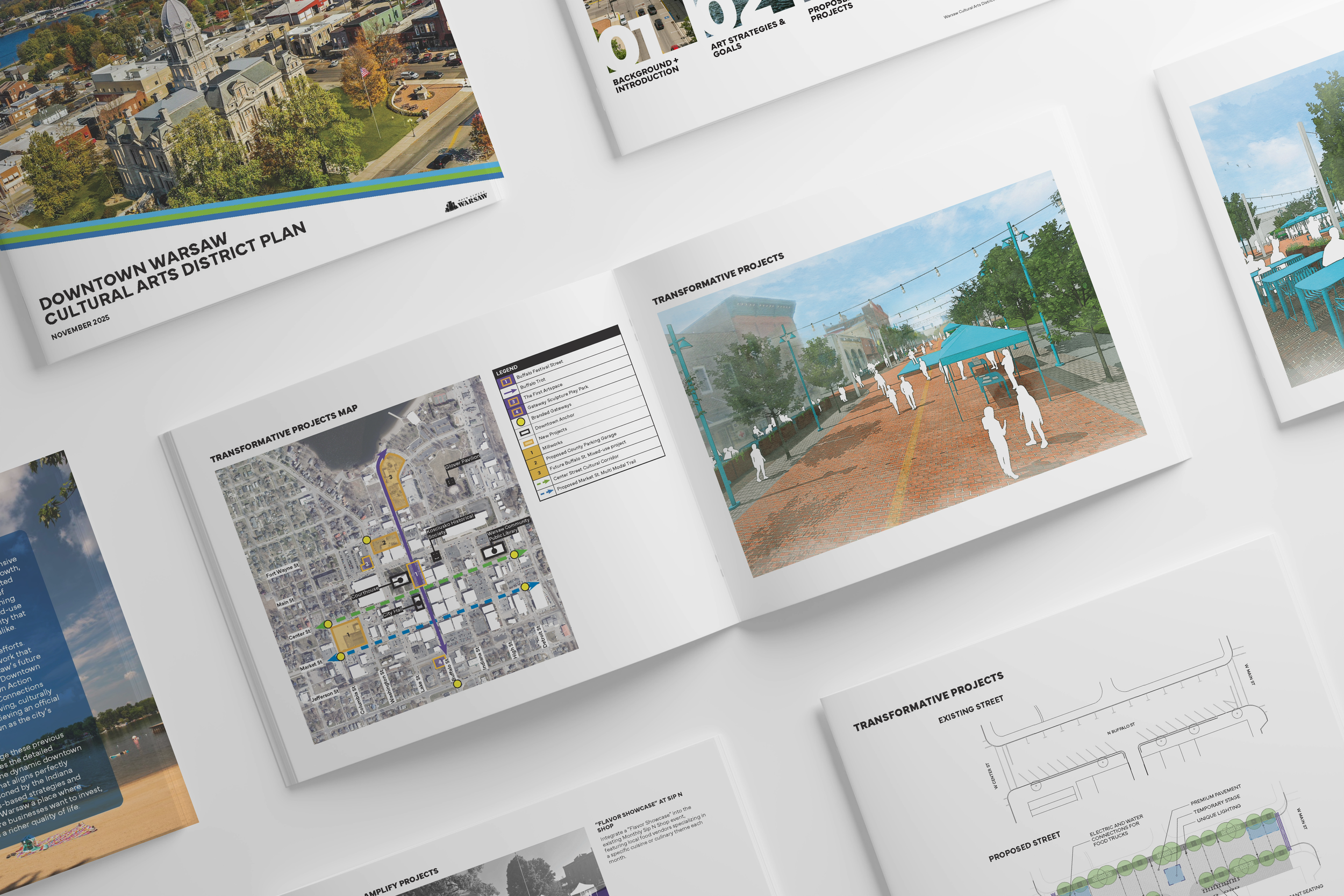
Downtown Warsaw Cultural Arts District Plan
Warsaw, Indiana
WHY
The Downtown Warsaw Cultural Arts District Plan serves as a comprehensive guide for leveraging the city’s cultural assets for sustained economic growth, with the ultimate goal of creating an Indiana Arts Commission-designated Indiana Cultural District. This plan is the necessary next step in a series of strategic efforts. It is built upon a solid foundation of recent, extensive strategic work that has consistently identified arts and culture as essential to Warsaw’s future economic vitality. Key previous planning efforts, including the Downtown Warsaw 2030 Strategic Plan, the Hyatt Palma 2023 Downtown Action Agenda, and the Brookings Institute/ LISC Critical Corridor Connections Plan, all established a clear mandate for a “vibrant and growing, culturally focused downtown”. These plans specifically called for achieving an official state cultural district, designation and solidifying downtown as the city’s “corporate, civic, and cultural center.”
HOW
The strategic heart of this plan is built from the ground up, developed through a multi-phased process of research, and rooted in extensive community engagement, to ensure authenticity. This was supported by detailed driveshed analysis to define the district’s economic potential and regional audience. This input was synthesized into a powerful vision for a culturally focused downtown that serves as an economic engine for the entire community, and will transform it into a vibrant, well-recognized, and labeled mixed-use cultural center. It features unique, authentic art and a cultural identity that makes the district memorable to visitors, residents and investors alike.
To bring this vision to life, this plan posits a strategic framework based on three core principles- Activate, Beautify, and Connect-thus providing methodology for every project proposed in this plan.
WHAT
Through strategy placemaking, downtown Warsaw’s Cultural Arts District will become a premier destination where a culturally rich and diverse scene serves as an economic engine-attracting investment, retaining top talent, and enriching the quality of life for the entire community.
Implementation of this plan is the critical step to leverage previous efforts and use the arts for economic growth. It provides detailed strategies for enhancing public spaces and creating the dynamic downtown experience envisioned by the community- a vision that aligns perfectly with the state’s focus on talent attraction as championed by the Indiana READI program. This document provides the needs-based strategies and placemaking recommendations required to make Warsaw a place where creative professionals want to live and work, where businesses want to invest, and where the entire community can experience a richer quality of life.
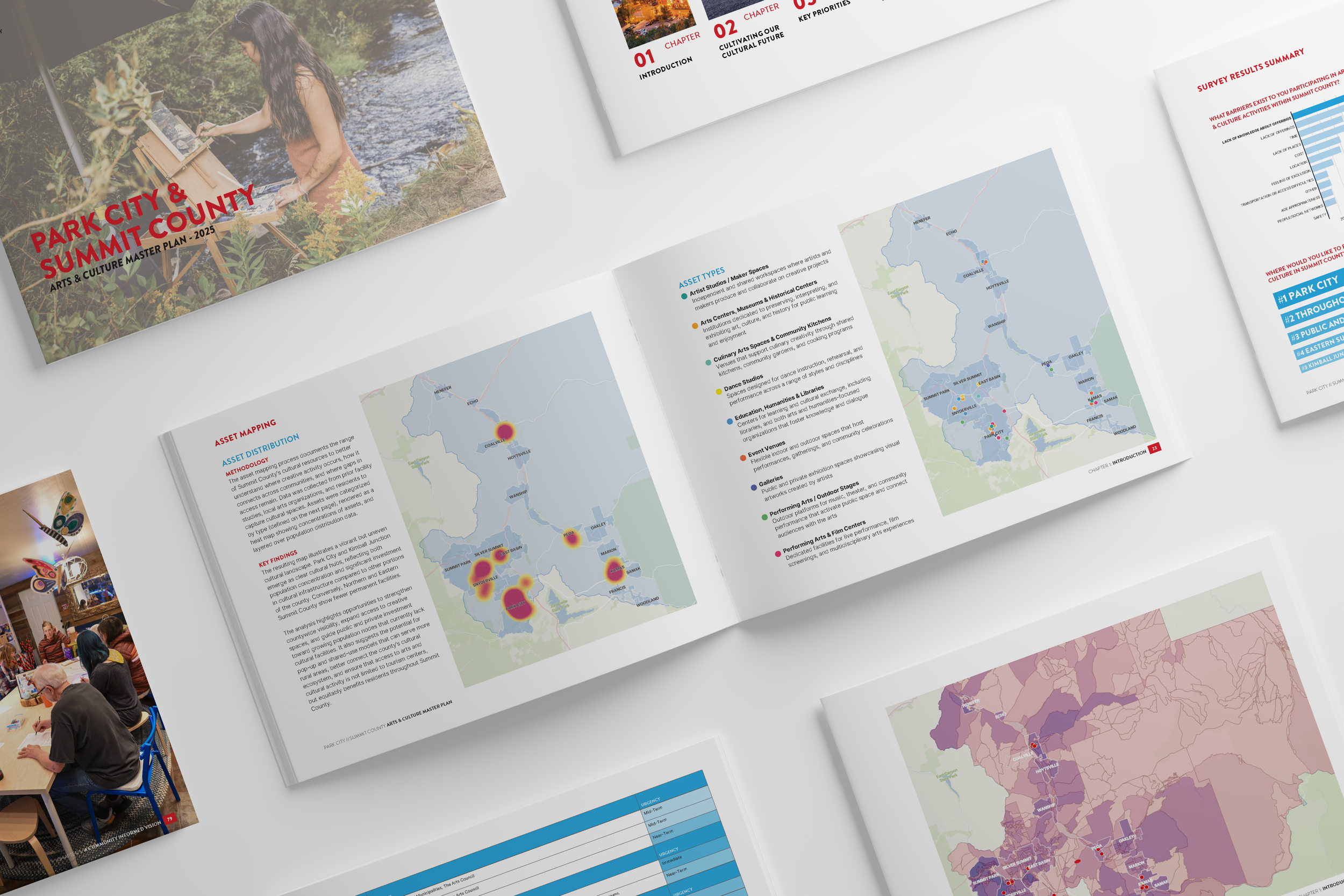
Park City // Summit County Arts & Culture Master Plan
Park City // Summit County, Utah
WHY
The foundations of this Arts & Culture Master Plan emerge from a deep understanding of Summit County’s creative landscape—its history, its current conditions, and the aspirations voiced by residents, artists, and cultural leaders. Through comprehensive planning assessment, data analysis and asset mapping, peer benchmarking, and community engagement, a clear picture comes into focus: Summit County is a community rich in cultural assets yet marked by uneven access, constrained capacity, and untapped potential. These foundational insights ground the plan’s vision and directly shape the strategies and key priorities that chart a roadmap toward a more connected, equitable, and resilient cultural ecosystem for all.
HOW
The Park City // Summit County Arts & Culture Master Plan is grounded in a comprehensive assessment of the county’s cultural ecosystem, combining asset mapping, benchmarking, data analysis, and targeted community engagement to understand both strengths and structural gaps. The planning process revealed a region rich in cultural legacy and economic impact, yet constrained by uneven geographic access, fragmented leadership, limited infrastructure, and a lack of coordinated funding and implementation capacity. These findings shaped a clear, evidence-based framework for action rather than a purely aspirational vision.
WHAT
Building on prior efforts such as Project ABC (Arts, Beauty, Culture) and the Sustainable Tourism Plan, the Master Plan establishes a strategic roadmap to strengthen arts and culture countywide through coordinated leadership, diversified funding, equitable distribution of facilities and programming, and long-term cultural infrastructure investment. The plan emphasizes practical mechanisms—such as expanded public art planning, artist housing and workspace strategies, cultural district development, and cross-sector partnerships—to support sustainable growth and community identity. By aligning cultural planning with tourism, economic development, and placemaking, the plan provides a phased, implementable guide to ensure arts and culture remain integral to Summit County’s social, economic, and physical vitality.
Watsonville Arts Plan
Watsonville, California
WHY
This Plan supports and furthers the City's commitment to supporting and fostering community arts and culture, as outlined in the City's Public Art/Percent for the Arts Program and the Downtown Watsonville Specific Plan, as well as capital improvement projects, such as the City Plaza Revitalization Project.
HOW
This plan establishes a strategic framework for strengthening arts and culture as a driver of community well-being and economic opportunity, grounded in the city’s cultural heritage and locally led creative activity. Central to the plan is the creation of a formal Cultural District and the strategic use of the City’s Percent for the Arts program to support coordinated investment, long-term planning, and increased visibility for local artists and cultural organizations.
WHAT
The plan prioritizes cross-sector partnerships with organizations such as the Arts Council of Santa Cruz County, Arts de Watsonville, Watsonville Film Festival, Cabrillo College, and Watsonville Brillante to better connect local creative talent to professional and economic opportunities. To support this ecosystem, the plan emphasizes organizational capacity-building, strategic staffing, and the exploration of expanded funding streams and targeted support programs that strengthen the sustainability of arts organizations and creative workers.
To translate strategy into on-the-ground impact, the plan focuses on physical and professional infrastructure that supports artists where they live and work. Recommendations include performance-ready infrastructure, permanent public art, and arts-led revitalization efforts that position culture as the heart of the community. These physical investments are paired with a unified Watsonville Arts identity, improved marketing and storytelling, and a more streamlined permitting process—ensuring local artists have the tools, visibility, and support needed to shape Watsonville’s identity and long-term prosperity.
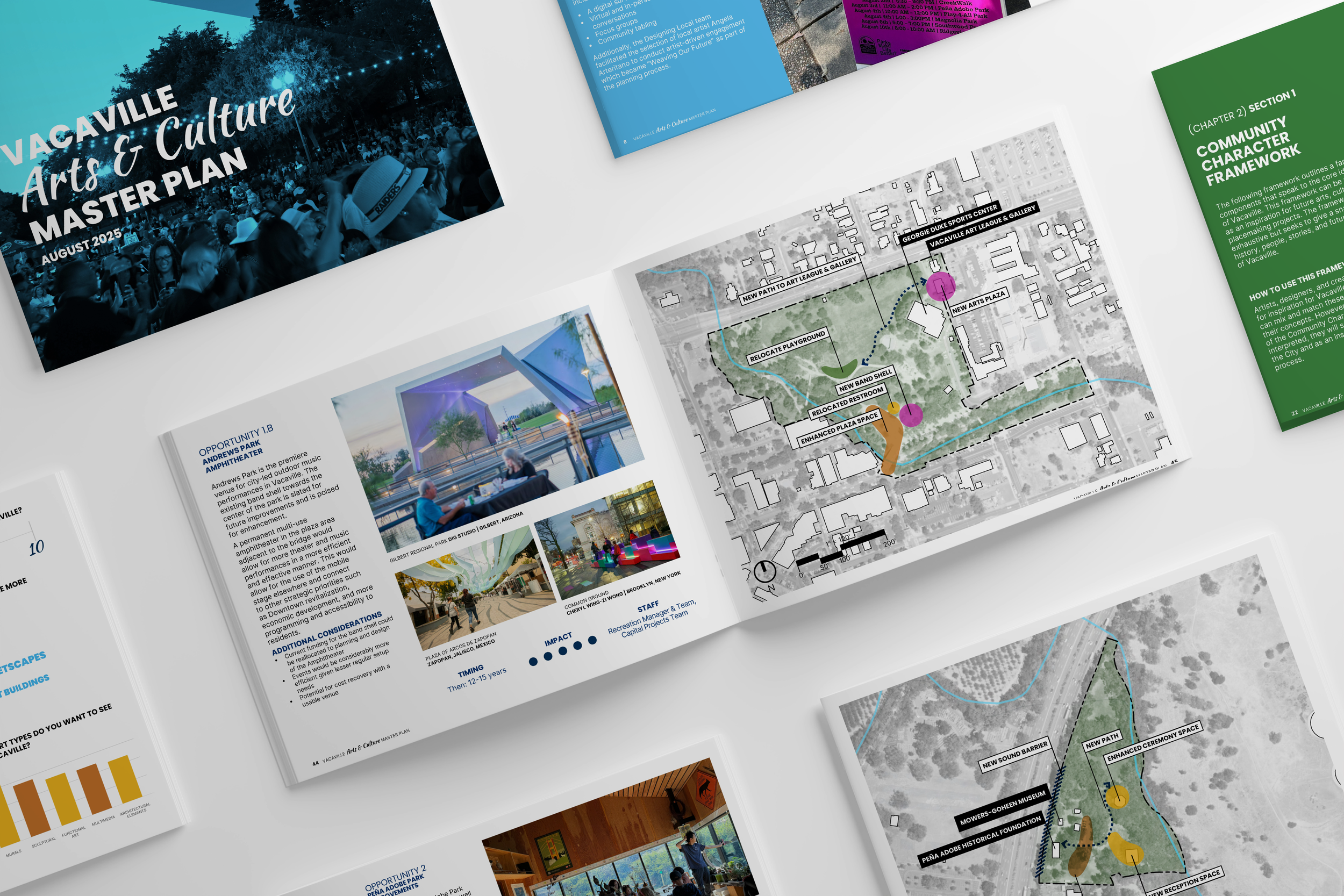
Vacaville Arts & Culture Master Plan
Vacaville, California
WHY
The Vacaville Arts & Culture Master Plan was developed through a comprehensive and highly collaborative process led by Designing Local, structured around four key phases: Discovery, Community Engagement, Synthesis, and Plan creation.
HOW
The success of the plan was the extensive outreach that was completed, which actively involved residents, local creatives, and arts organizations from every corner of the city. A major component of this phase was the “Weaving Our Future” art project, featuring workshops held in each of Vacaville’s districts, where community members shared their aspirations for public art and cultural engagement through words, drawings, and shapes. This hands-on, community-driven approach was critical to building consensus and ensuring the final plan reflected the diverse voices and visions of Vacaville’s population.
WHAT
The final Plan provides a focused, five-year strategic roadmap for the City’s commitment to arts and culture, establishing foundational policies, a clear vision for cultural growth, and a streamlined approach to public art integration. Key tangible outcomes include the comprehensive Arts and Culture Master Plan document, accompanied by a Draft Public Art Program Policy and a Draft Arts Advisory Committee Policy. Together, these deliverables define the infrastructure for the City to enhance quality of life, strengthen local economic development, and cultivate a truly culturally rich and attractive community for both residents and visitors alike.
Loudoun County Comprehensive Arts Plan
Loudoun County, Virginia
WHY
The Loudoun County Comprehensive Arts Plan (CAP) presents a vision, goals, and strategies to develop and establish Loudoun County, Virginia as a thriving arts and culture destination within the state. The actionable strategies outlined in this plan include public art investments, strategic artist support; and diverse, arts-focused programming and facilities that enrich and contribute to the health and wellbeing of the community. With vital input gleaned from community members, stakeholders, and experts, the plan emphasizes art that reflects Loudoun County’s culturally rich heritage.
HOW
The proposals outlined in the CAP were developed directly from extensive community engagement that was conducted from Fall 2024 through Spring 2025. Engagement for the CAP was split into two phases: Setting the Baseline and Ideating on the Future.
Phase 1: Setting the Baseline - Designed to elicit a comprehensive understanding of the arts and culture amenities and resources available in Loudoun County, and the direction in which participants wanted to see it progress. It consisted of a public survey, which received over 1,100 responses, over 60 one-on-one stakeholder interviews, 12 focus groups, and tabling at community events.
Phase 2: Ideating on the Future - Offered the community opportunities to review the findings of Phase 1 and rank them. This consisted of 4 public meetings and 3 virtual meetings totaling over 150 attendees, as well as additional targeted outreach.
The ideas developed in Phase 1, which included concepts such as increasing publicity and marketing efforts around the arts, and creating more visual spaces for artists, were prioritized during Phase 2 and then narrowed down into 5 guiding principles. Engagement from both phases helped our team develop a concise vision for arts and culture in Loudoun County.
WHAT
The Loudoun County Comprehensive Arts Plan will invigorate Loudoun County’s Arts and Culture Programming by consistently helping to create engaging public art, elevate and promote the value of the arts, while also fostering it as an accessible and inclusive community. The CAP proposes more investments in arts education for all ages that instills the importance of the arts in day-to-day life, but also supports a range of affordable, quality facilities for both visual and performing artists to work on and share their craft. The CAP will help Loudoun County to integrate arts and culture further into its identity, through leveraging existing infrastructure, expertise, and community connections to maximize impact and efficiency. These strategies will help to facilitate seamless collaboration, expand public access to the arts, and ensure that cultural initiatives are woven into the fabric of the community.
Danville Arts & Culture Plan
Danville, Virginia
WHY
To build upon the creative energies in the City of Danville a 10-year strategic arts and culture plan to formalize and operationalize the people and organizations already doing arts and culture work in Danville. The plan includes a well-defined vision, analysis, and brand for publicly supported art of all kinds within the City of Danville. The plan is intentional in weaving more opportunities for residents and visitors to enjoy the arts and Danville’s culture.
HOW
35 leaders in the sector were interviewed about their vision for the Cultural Arts Program. Stakeholders included arts organization leadership, elected officials, city department heads, and local arts business owners. Focus groups were also held with arts leaders from various organizations. Members of the public were engaged in a number of activities, including sharing their ideas for arts and culture and considering public art types and locations. The public was also given the opportunity to contribute directly to a survey, which received 181 responses.
Strategies were defined to target the needs and desires of specific community profiles to provide city leadership with a roadmap for implementation that serves all creators, consumers, and advocates of arts and culture.
WHAT
While participants shared the overall quality of arts and culture in Danville was average, there was a hunger for more—specifically, live music and theater and community arts events and festivals and iconic public art. Through the implementation of the arts and cultural experiences outlined in the plan, Danville will have a roadmap for how to capitalize on their growing tourism market drawing visitors and artists from the region while supporting creatives and cultural organizers at the local level.
Arts Launch Henderson
Henderson, Nevada
WHY
Henderson is a city with a longstanding upward trajectory and now is a unique moment to continue that forward movement with a large-scale focus on arts and culture. Over the previous decades the City of Henderson along with its partners have undertaken numerous arts and culture efforts. This plan builds off these previous informal efforts and seeks to formalize an arts and culture program in order to take the city to the next level of success in the arts.
HOW
The plan provides a blueprint by which Henderson can stake its claim as the foremost community for arts and culture in Southern Nevada. We begin by establishing a vision for arts and culture in Henderson and detailing the projects, programs, facilities, and partnerships that can be capitalized upon to advance strategic objectives. We then go in depth into the details of how to operationalize and fund ambitious new initiatives through a formal Arts & Culture Henderson program — as well as how this program would function. Finally, we dream big to explore potential projects that could launch Henderson with a detailed action plan.
WHAT
In addition to public engagement this plan is built upon intention. From the beginning the planning team and city staff determined that this plan should not only be visionary but should also be highly actionable. The plan would also need to be highly policy driven and one of the first outcomes of the planning process was the development of the Henderson Public Art Policy. The plan is also built upon the city’s other planning efforts. Throughout the document you will see efforts derived from the Strategic Plan, the Parks and Recreation Master Plan and other planning efforts the city has undertaken.
Peoria Arts & Culture Plan
Peoria, Arizona
WHY
Peoria is a well-established but fast growing city West Valley of the Phoenix Metro Region. The city has long focused on providing public art and cultural amenities for its residents and has had many successes since the adoption of the an Arts Master Plan in 2009. With most of the goals from the 2009 plan achieved and new leadership in place there was key opportunity to re-evaluate the program and determine next steps.
WHAT
The Peoria Arts & Culture Plan focuses on six key priorities that are bolstered by strategies and big ideas connected to the priorities to support transformational change. Extensive research and mapping supported the needs residents expressed in surveys and interviews: access to arts and culture needed increase to areas where it is not easily accessible.
Clearwater Cultural Arts Strategic Plan
Clearwater, Florida
WHY
The City of Clearwater has a long legacy of investing in arts and culture. In 2020, the city revisited its 2002 Clearwater Cultural Plan to identify new arts and culture opportunities for the community and create a guide to help the Cultural Arts Department implement them.
HOW
Designing Local employed community conversations, policy and program research, analysis of current cultural programming, and an understanding of the local and regional cultural ecosystems to create recommendations for the future success of Clearwater’s Cultural Arts Department.
WHAT
The updated Clearwater Cultural Plan is an implementation handbook to guide the next 5–7 years of the City of Clearwater’s Cultural Arts Department and ensure the long-term sustainability and vitality of the city’s cultural offerings.
Frankfort Arts Master Plan
Frankfort, Kentucky
WHY
Frankfort has been a destination for Kentuckians since its establishment as the state’s capital in 1792. Now the city and its partners have endeavored to improve arts and culture in the city, particularly in the downtown area, to increase economic activity and capitalize on the area’s popular bourbon industry. The city received an Our Town grant from the National Endowment for the Arts to express its community values and vision through public art, and to enhance cultural amenities throughout the city.
HOW
Like everything else in 2020, our planning process in Frankfort was upended by the COVID-19 pandemic. What was initially envisioned as a series of large public meetings became online focus groups and an enhanced survey effort. A socially distanced ‘choose your own adventure’ engagement opportunity was set up at an outdoor sculpture park to allow for safe in-person engagement. These efforts yielded extensive input and greatly influenced plan outcomes.
WHAT
The plan recognizes short-, medium-, and long-term strategies to achieve some broad and bold visions. By following the strategies outlined in this document, Frankfort will be able to phase in its proposed projects and programs as the economy recovers.
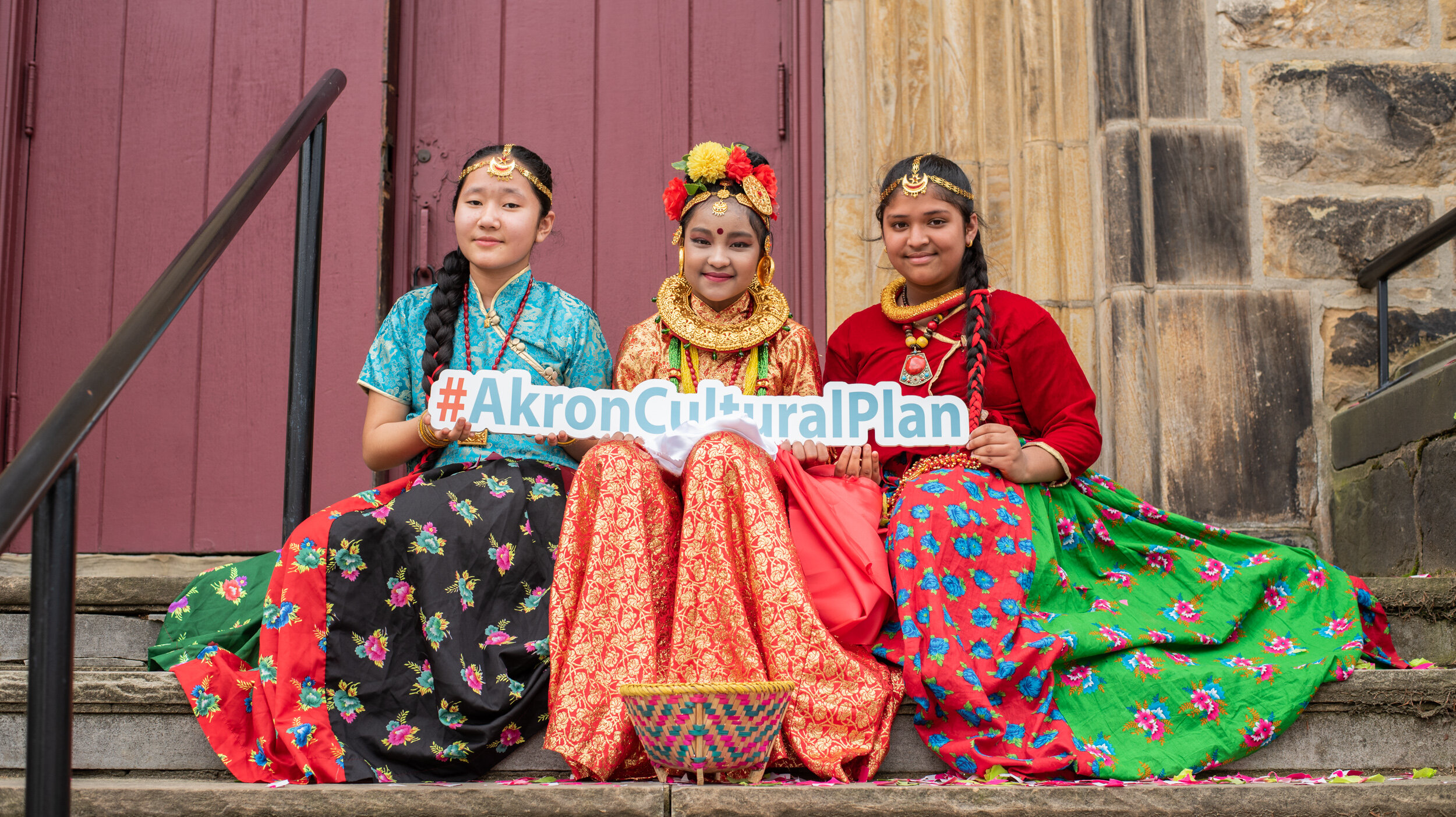
Akron Cultural Plan
ArtsNow | Akron, Ohio
WHY
The Akron Cultural Plan is a culmination of more than five years of work by the City of Akron, along with its partners ArtsNow, the GAR Foundation, and the John S. and James L. Knight Foundation. The plan seeks to build upon past studies of Akron’s cultural landscape to help the community grow and prosper, with arts and culture at the center of the city’s renaissance.
HOW
Extensive public and stakeholder engagement revealed themes of access, equity, parity, and more. Initial recommendations focused on creating more inclusive creative leadership in Akron and creating access for all.
WHAT
Work on the plan began in early 2019 and was completed in March 2020. Recommendations fell into 10 priority areas: Equity, Accessibility, Education, Talent, Engagement, Connections, Economic Impact, Resources, Placemaking, and Public Art. The planning team continues to assist with ongoing implementation of the Akron Cultural Plan and the Akron Public Art Program.
Why a Cultural Plan?
As part of the Cultural Plan, the team created a
series of videos from community members to
encourage participation throughout Akron. Here
are a few of our favorites. Check out more videos
on our YouTube page!
Upper Arlington Arts & Culture Master Plan
Upper Arlington, Ohio
WHY
The City of Upper Arlington has one of the oldest arts and culture programs in Central Ohio. Housed within the Parks & Recreation Department, its Cultural Division is advised and supported by the Cultural Arts Commission, a seven-member group appointed by City Council for the purpose of fostering and encouraging the development and preservation of arts in the community. As part of this charge, the Commission recognized the need for a clear and thoughtful master plan to guide the future of cultural arts in the City of Upper Arlington.
HOW
The yearlong process of developing the master plan kicked off in the fall of 2018, beginning with a general study of the history and current state of the arts in Upper Arlington. This research was followed by an extensive 6-month community input process that included more than 1,000 one-on-one touch points in the form of surveys, focus group meetings, and pop-up events held throughout the city. The feedback received from this public engagement demonstrated the community’s support for the Division’s programs, as well as support for continued investment in the arts.
WHAT
The Arts and Culture Master Plan established a series of short-, mid-, and long-term implementation strategies that focused on enhancing existing programming, strengthening operations, and raising awareness of the arts and culture opportunities available to residents. It provided clarity on the purpose, roles, and responsibilities of the Cultural Arts Commission, and set forth an inspirational guiding framework for exploring expanded public art opportunities in the community. The plan was accepted by Council in December 2019.
Surprise Arts & Culture Master Plan
Surprise, Arizona
WHY
Surprise, Arizona is a city in the West Valley of the Phoenix Metro Region whose leaders are looking to arts and culture to help define their vast and growing metro area. Current plans forecast that by 2050, today’s 125 square miles will expand to 400+, and today’s 125,000 residents will increase to 500,000. This projected growth provides an opportunity for the city to proactively ensure new development is interspersed with arts and culture reflecting the city and its people.
HOW
Great care was paid to integrating the Public Art Master Plan with other planning efforts, such as the Park and Recreation Master Plan, to ensure that it could be easily implemented alongside others as the city grows and develops. Due to the large scale of the population and land area, the team focused on making public engagement accessible and diverse. From baseball spring training to public art bus tours, the team provided interesting engagement opportunities that met the needs of a community whose population includes large numbers of young families and retirees.
WHAT
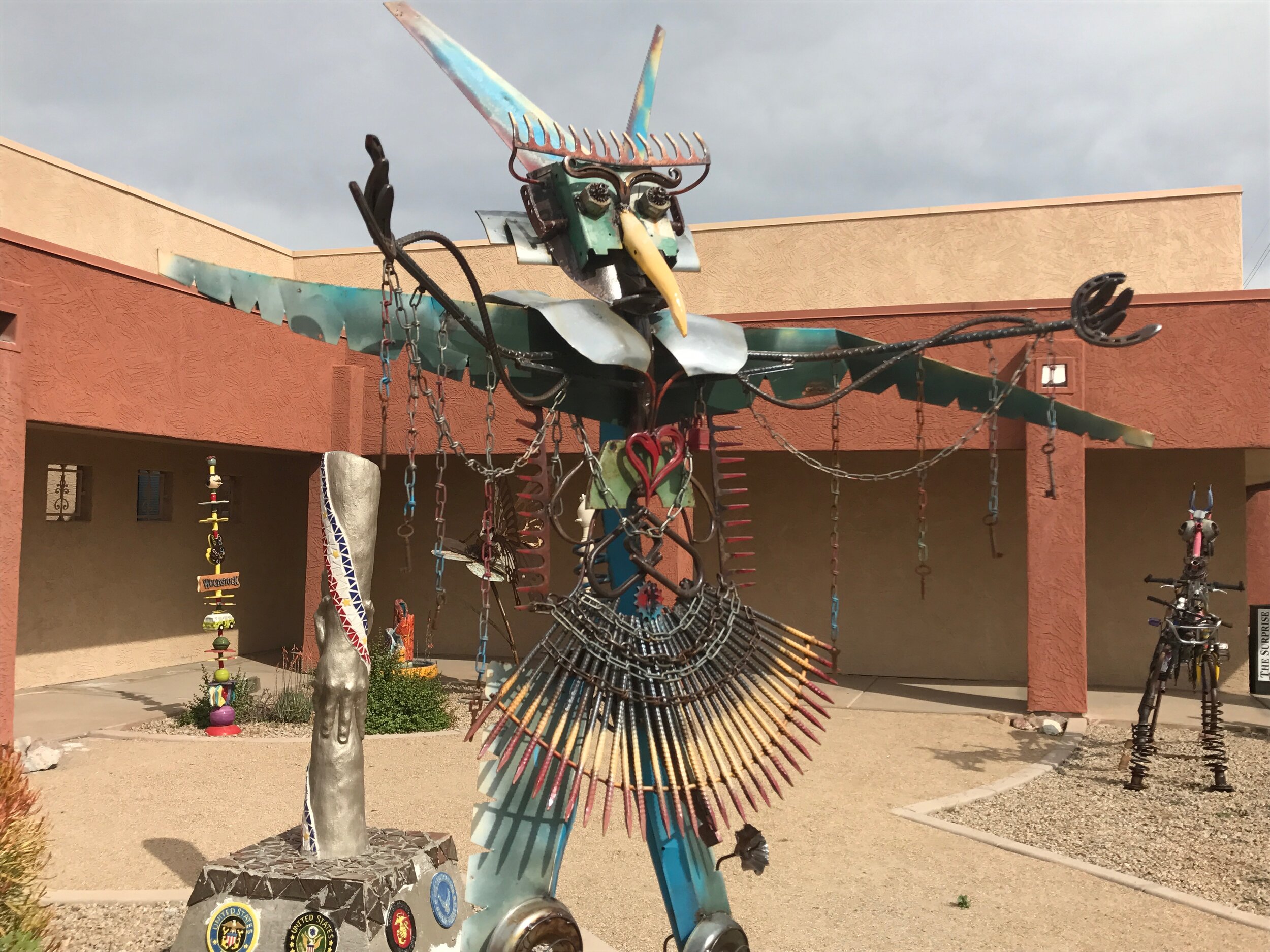
The Surprise Public Art Master Plan covers topics ranging from recommendations on how to bring more publicly- and privately-supported public art to the city to encouraging the development of large-scale cultural venues. The plan helps solidify the role of art and culture in the future of Surprise.
University District Arts & Character Plan
University District Organization | Columbus, Ohio
WHY
“Time” and “change” aren’t just words in The Ohio State University’s alma-mater, they are words that perfectly capture the University District neighborhood. As the ever-evolving place transitions into another new era, long-term residents and businesses want to ensure the spirit of the community lives on for the next generation. The University District Organization took action to ensure that new buildings had ample public art offerings and new residents had myriad opportunities to engage with the arts.
HOW
A diverse community necessitates diverse engagement. In the University District, this meant targeted outreach to artists and performers through Music, Visual Arts, Culture, and History workshops hosted at various music, art, and poetry venues. Additionally, residents, students, and others who cared about the neighborhood were provided online and in-person opportunities to share ideas about how its spirit could be better reflected in the built environment.
WHAT
The University District Arts and Character Plan generated targeted recommendations to add public art to the neighborhood and bolster existing performing arts and music venues. A ‘Music Trail’ concept modeled on other successful marketing efforts — but with an artistic twist — will help drive attendance to existing music venues. Additional recommendations include specific locations for art pieces to be added, as well as possible future art trails and installations.