Reimagining Columbus
Columbus, Ohio
WHY
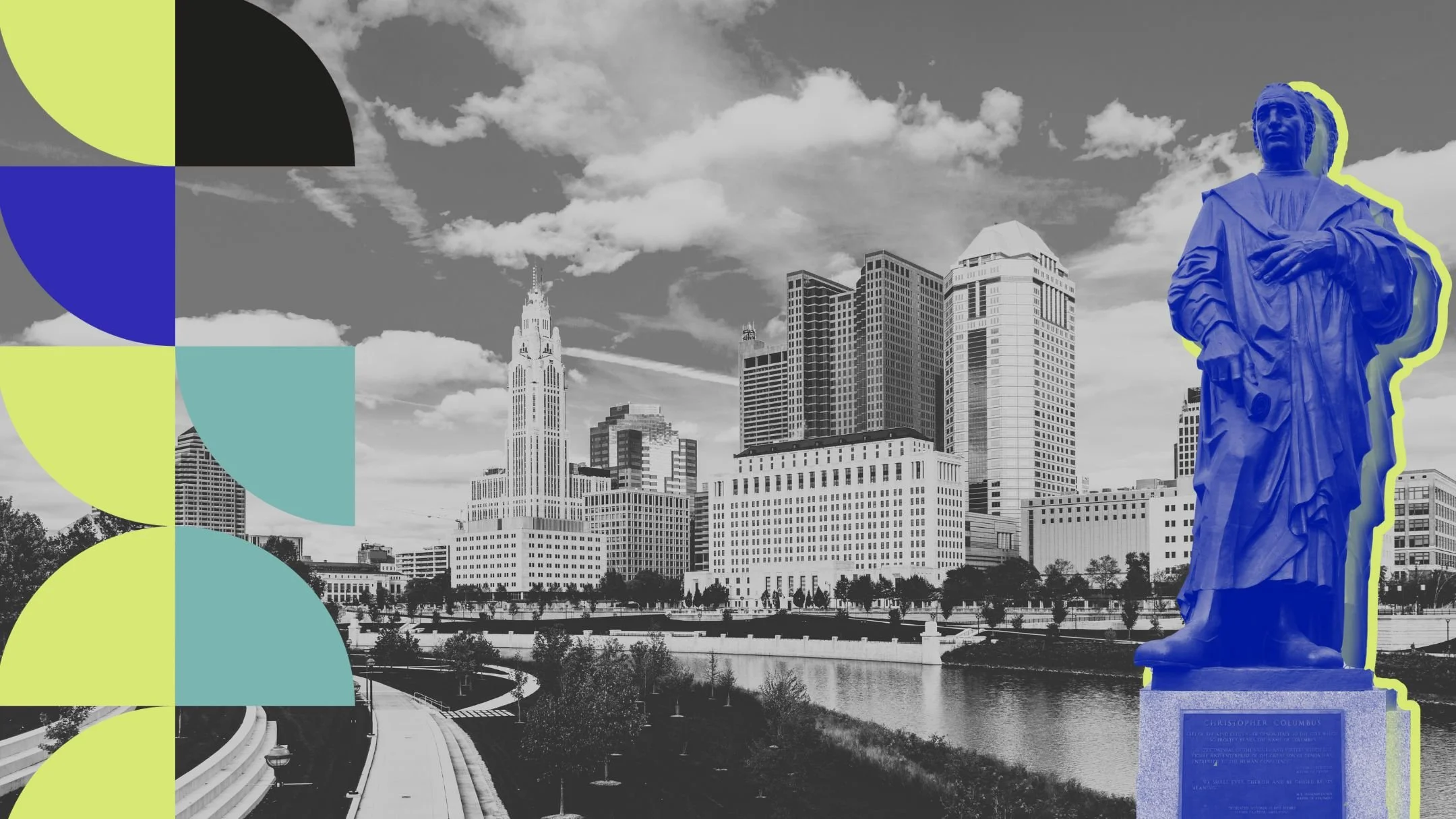
In the turbulent summer of 2020, when protests erupted over police brutality against people of color and controversial statues were being toppled and defaced nationwide, the City of Columbus preemptively removed its Christopher Columbus statue from the steps of City Hall. With the statue in storage, the City of Columbus partnered with Designing Local in 2023 to seek funding from the Mellon Foundation for “Reimagining Columbus,” a 2-year research, community engagement, and design process to reckon with the statue and imagine a future in which truths about its subject are more accurately conveyed. The proposal was awarded $2 million and Designing Local was tasked with managing the project.
HOW
Designing Local managed a multi-disciplinary team to undertake the following:
RESEARCH & LEARNING. In order to confidently recommend a course of action regarding the City of Columbus’ Christopher Columbus statue, the Reimagining Columbus project team felt it was important to be grounded in truths about the explorer and his legacies, particularly those within Columbus, Ohio. Learnings from subject matter experts, museums and site tours, original research, community conversations, and arts and culture colleagues nationwide were used to educate the public and inform project deliverables.
COMMUNITY ENGAGEMENT. In recognition that conversations about the Columbus statue would challenge participants — particularly those from the city’s Indigenous, Italian-American, and Black communities — the Reimagining Columbus engagement team planned a process that would accommodate their emotions about it but also forge a collective path forward. The team’s approach to this conversation utilized a customized, emotional safety–oriented methodology centered on Sankofa, the Ghanan idea that progress requires applying lessons from the past, to encourage more courageous sharing and evoke personal histories that could be influencing present-day perceptions. Large group and affinity group conversations, community events, and written feedback were employed in various ways throughout the process.
DESIGN. The project’s design team worked to translate the learnings from research and community engagement into a design concept for a possible new Christopher Columbus statue placement. The team relied on Indigenous design principles to guide their vision for an immersive experience of nature and community togetherness at which visitors could experience the statue (or not), but also learn, play, restore themselves, and heal.
WHAT
Designing Local delivered the following Reimagining Columbus project outcomes:
A website and StoryMap timeline, 2 research papers, 35 videos with more than 20 hours of educational content, and several in-person community learning exchanges provided context regarding Christopher Columbus, the statue of his likeness and public perceptions of it, and the city’s relationship with its namesake.
More than 20 community events and affinity group conversations elicited rich, layered feedback to help inform the design process.
Conceptual designs of a new space in which to display and contextualize the statue, based on Indigenous design principles, translated research and community feedback into physical elements that could tell the story of Columbus — the city and the man — and help all visitors experience emotional safety in the space. So expansive did this vision become that the city, the Reimagining Columbus project team, and community members were inspired to embrace it as a generational vision for an altogether new type of public space in the city.
An art plan for City Hall campus suggested how new art could refresh and enliven this uninspiring civic space and ensure that it celebrates all city residents.
View the Project Outcomes Here
Campus District Master Plan
Cleveland, Ohio
WHY
The Campus District in Downtown Cleveland, Ohio is a key downtown area defined by three anchor institutions: Cleveland State University (CSU), Cuyahoga Community College (Tri-C) Metro Campus, and the former St. Vincent Charity Medical Center. Located just east of the central business district along major corridors, this area is a dense, dynamic mix of educational institutions, social services, and businesses, drawing thousands of students, faculty, and workers daily. Recent and future developments have spurred the need to revitalize the area in order to attract mixed-use residential projects and street-level retail and to maintain access to critical social services. This area is a dynamic urban community that is well positioned to be a destination for living, working, and healing.
HOW
The Campus District Master Plan establishes a strategic framework for fostering a community of purpose, focusing on five key themes: safety, vibrancy, connectivity, restoration, and authenticity. This comprehensive approach is designed to drive economic growth and cultivate a neighborhood with attractive housing options, ultimately transforming the area into a more active and connected urban environment. Designing Local leveraged core themes to enhance the district’s historic character. Specific interventions to improve connectivity between key amenities at the north and south ends of this large urban area, create new public spaces like the Campus Trail and pocket parks, and identify public art and placemaking opportunities that will serve as catalysts for economic development and resident attraction. The plan’s initial objectives include refining zoning, simplifying the design review process, expanding historic tax credit opportunities, and strategically redeveloping marquee historic buildings to diversify the housing stock.
WHAT
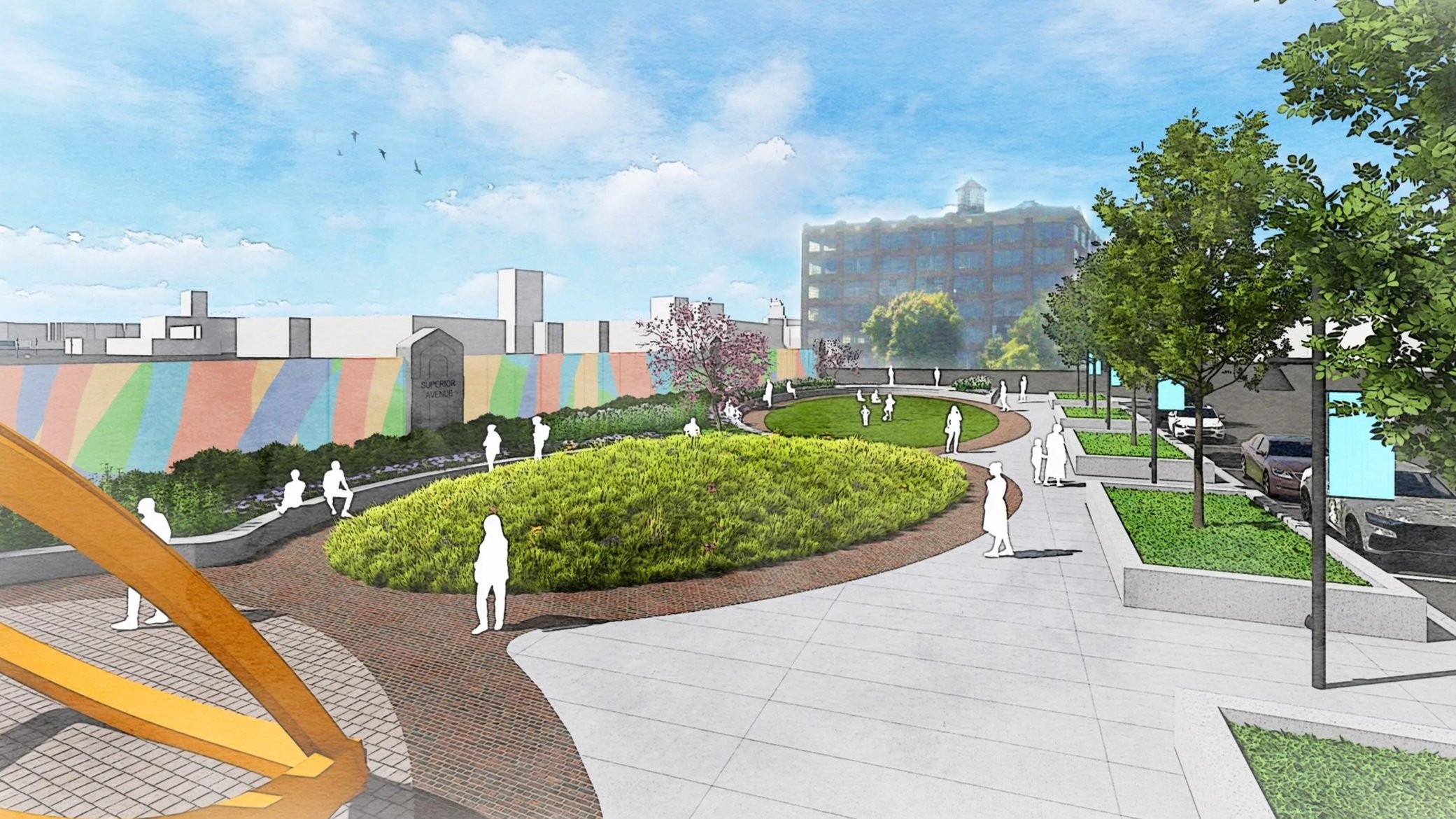
The master plan prioritizes enhancing multimodal connectivity and revitalizing the public realm. Initiatives are focused on supporting small businesses, consolidating surface parking lots for future development, and implementing public art programs that will revitalize streetscapes and define new gateways at the eastern and western edges of the district. The ultimate goal is to create a well-connected and economically strong Campus District that celebrates its significant history while establishing itself as an iconic destination for residents and visitors of Downtown Cleveland.
Vacaville Arts & Culture Master Plan
Vacaville, California
WHY
The Vacaville Arts & Culture Master Plan was developed through a comprehensive and highly collaborative process led by Designing Local, structured around four key phases: Discovery, Community Engagement, Synthesis, and Plan creation.
HOW
The success of the plan was the extensive outreach that was completed, which actively involved residents, local creatives, and arts organizations from every corner of the city. A major component of this phase was the “Weaving Our Future” art project, featuring workshops held in each of Vacaville’s districts, where community members shared their aspirations for public art and cultural engagement through words, drawings, and shapes. This hands-on, community-driven approach was critical to building consensus and ensuring the final plan reflected the diverse voices and visions of Vacaville’s population.
WHAT
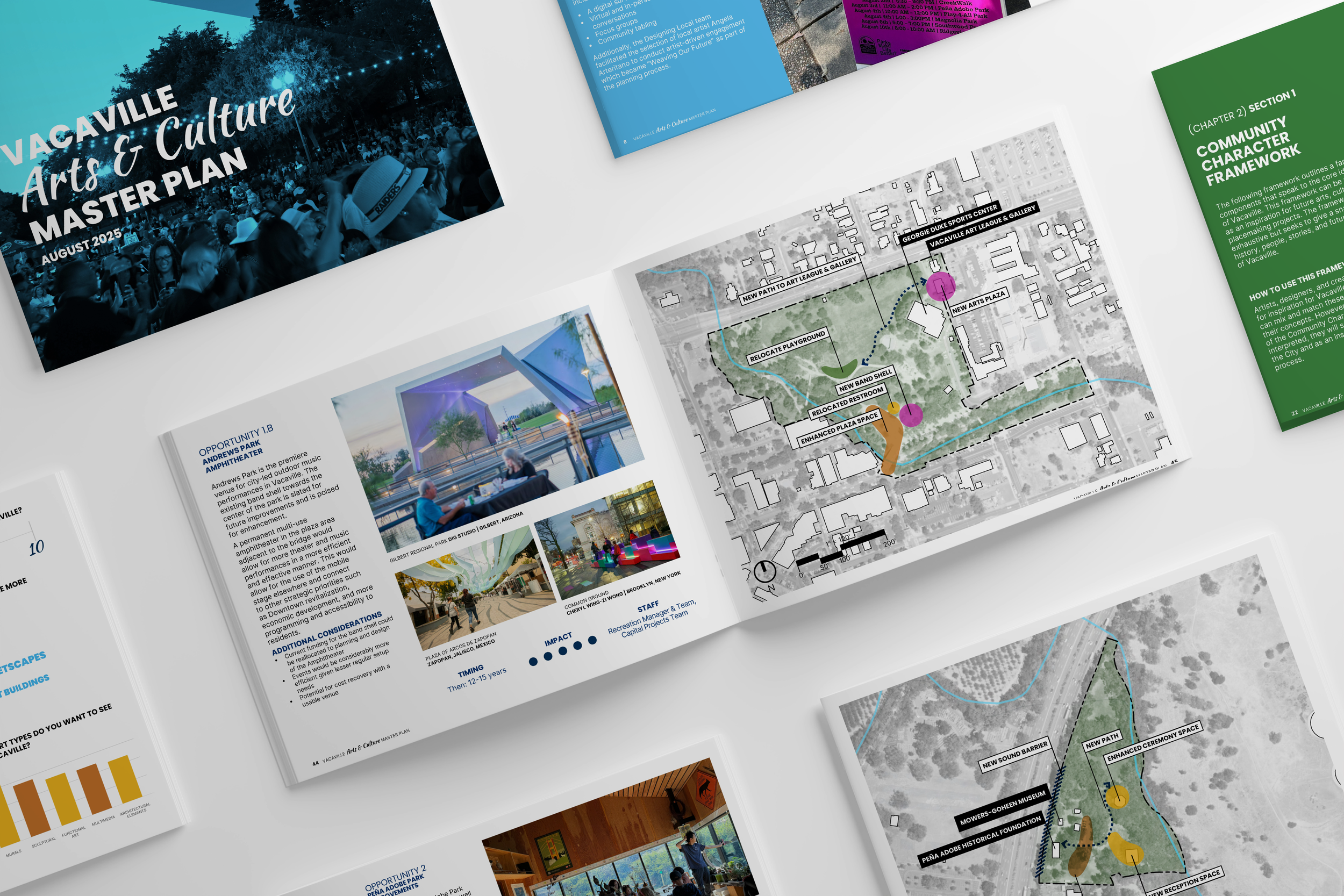
The final Plan provides a focused, five-year strategic roadmap for the City’s commitment to arts and culture, establishing foundational policies, a clear vision for cultural growth, and a streamlined approach to public art integration. Key tangible outcomes include the comprehensive Arts and Culture Master Plan document, accompanied by a Draft Public Art Program Policy and a Draft Arts Advisory Committee Policy. Together, these deliverables define the infrastructure for the City to enhance quality of life, strengthen local economic development, and cultivate a truly culturally rich and attractive community for both residents and visitors alike.