Reimagining Columbus

Columbus, Ohio

WHY

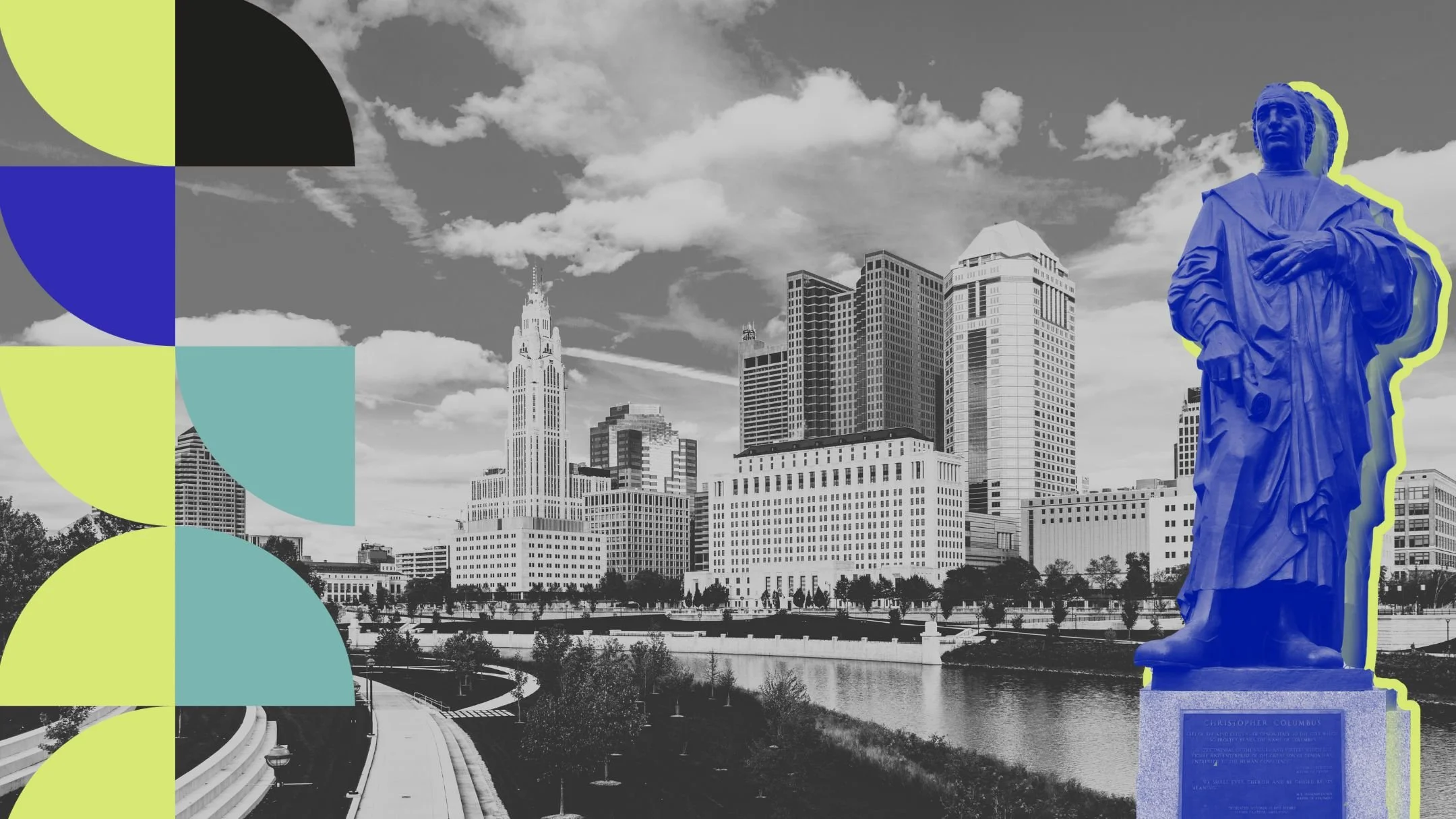
In the turbulent summer of 2020, when protests erupted over police brutality against people of color and controversial statues were being toppled and defaced nationwide, the City of Columbus preemptively removed its Christopher Columbus statue from the steps of City Hall. With the statue in storage, the City of Columbus partnered with Designing Local in 2023 to seek funding from the Mellon Foundation for “Reimagining Columbus,” a 2-year research, community engagement, and design process to reckon with the statue and imagine a future in which truths about its subject are more accurately conveyed. The proposal was awarded $2 million and Designing Local was tasked with managing the project.

HOW

Designing Local managed a multi-disciplinary team to undertake the following:

  • RESEARCH & LEARNING. In order to confidently recommend a course of action regarding the City of Columbus’ Christopher Columbus statue, the Reimagining Columbus project team felt it was important to be grounded in truths about the explorer and his legacies, particularly those within Columbus, Ohio. Learnings from subject matter experts, museums and site tours, original research, community conversations, and arts and culture colleagues nationwide were used to educate the public and inform project deliverables.

  • COMMUNITY ENGAGEMENT. In recognition that conversations about the Columbus statue would challenge participants — particularly those from the city’s Indigenous, Italian-American, and Black communities — the Reimagining Columbus engagement team planned a process that would accommodate their emotions about it but also forge a collective path forward. The team’s approach to this conversation utilized a customized, emotional safety–oriented methodology centered on Sankofa, the Ghanan idea that progress requires applying lessons from the past, to encourage more courageous sharing and evoke personal histories that could be influencing present-day perceptions. Large group and affinity group conversations, community events, and written feedback were employed in various ways throughout the process.   

  • DESIGN. The project’s design team worked to translate the learnings from research and community engagement into a design concept for a possible new Christopher Columbus statue placement. The team relied on Indigenous design principles to guide their vision for an immersive experience of nature and community togetherness at which visitors could experience the statue (or not), but also learn, play, restore themselves, and heal.

WHAT

Designing Local delivered the following Reimagining Columbus project outcomes: 

  • A website and StoryMap timeline, 2 research papers, 35 videos with more than 20 hours of educational content, and several in-person community learning exchanges provided context regarding Christopher Columbus, the statue of his likeness and public perceptions of it, and the city’s relationship with its namesake.

  • More than 20 community events and affinity group conversations elicited rich, layered feedback to help inform the design process. 

  • Conceptual designs of a new space in which to display and contextualize the statue, based on Indigenous design principles, translated research and community feedback into physical elements that could tell the story of Columbus — the city and the man — and help all visitors experience emotional safety in the space. So expansive did this vision become that the city, the Reimagining Columbus project team, and community members were inspired to embrace it as a generational vision for an altogether new type of public space in the city.

  • An art plan for City Hall campus suggested how new art could refresh and enliven this uninspiring civic space and ensure that it celebrates all city residents.

View the Project Outcomes Here

Read More

NCIRPC Strategic Arts Plan

North Central Indiana Region, Indiana

WHY

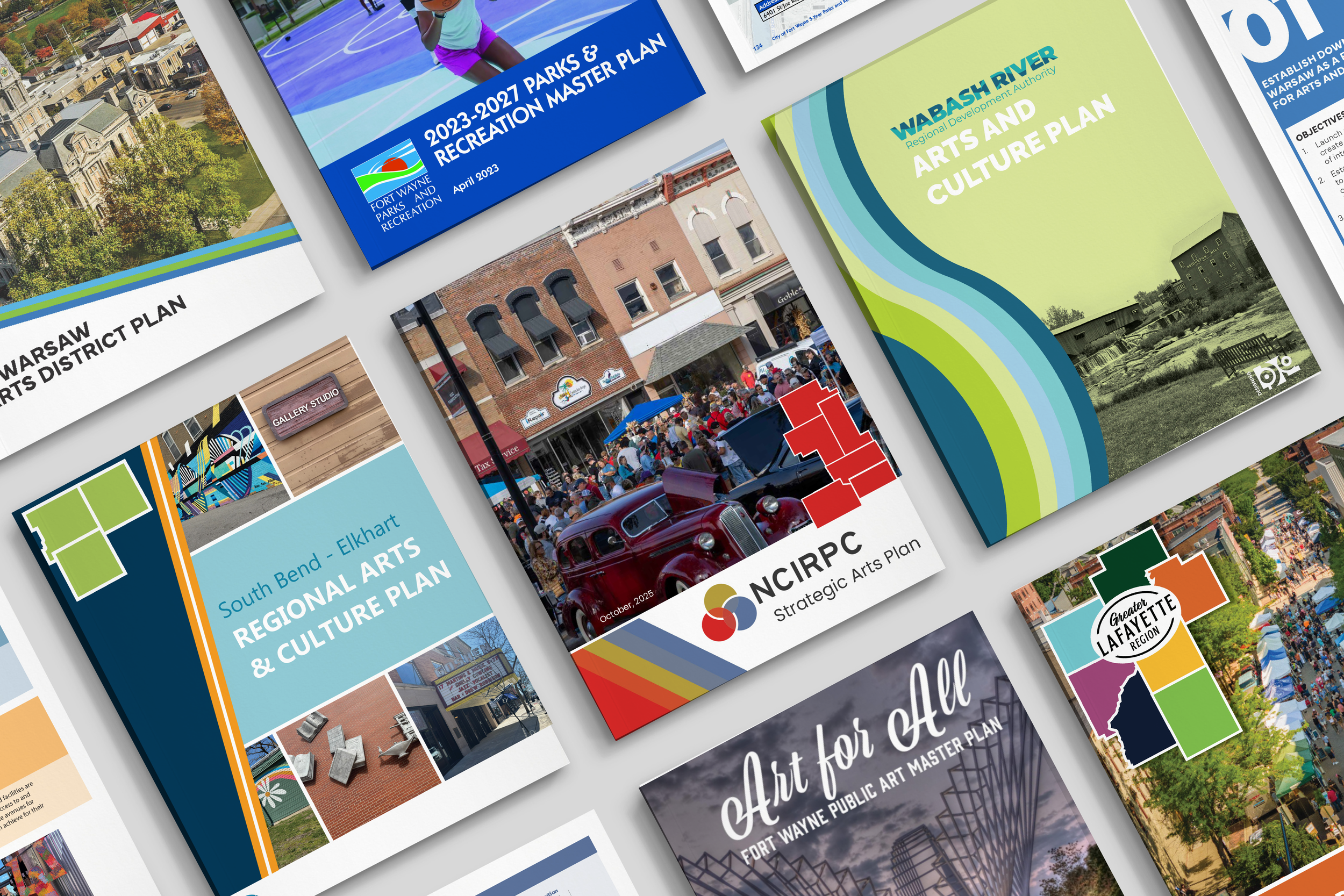
The North Central Indiana Regional Planning Council (NCIRPC), together with its partners, has developed a comprehensive, collaborative, and strategic plan to support and expand arts and cultural initiatives across the six-county region. With a strong focus on building community and fostering a thriving creative economy, the plan seeks to improve accessibility to the arts, retain and attract artists and creatives, and strengthen cultural amenities. With more than 226,000 people living across 2,100 square miles and significant development along regional corridors including Route 31, US 24, and 165, there are many opportunities for increased investment in arts and culture to enhance quality of life for residents and expand recreational tourism. The NCIRPC region is a vibrant destination for arts and culture that encourages community building and inclusivity, with a diverse artistic landscape that attracts creatives and cultural consumers to visit and invest in local communities. The goals of this plan include increasing accessibility and visibility of the arts, fostering and leveraging existing resources and amenities, invigorating local economies, and creating a stronger sense of pride in local experiences. Its objectives include developing state-of-the-art arts and culture facilities that engage residents and create new tourism opportunities, expanding engaging public art throughout the region, and encouraging programming in North Central Indiana communities that improves quality of life through increased access to arts experiences.

HOW

Engagement with local professionals and stakeholders was vital to the success of this process, with participation facilitated through a digital community survey and virtual conversations with the planning team. Business owners, arts organizations, elected officials, and community members contributed through a series of focus groups and one-on-one discussions, helping to identify priorities that shaped a shared vision, established project goals, and guided the prioritization of future efforts. Regional priorities played a significant role, and the flexibility of the long-term cultural planning framework allows decision-makers to pursue diverse funding sources while adapting implementation strategies to reflect changes and growth within the local cultural ecosystem. This nimble approach encourages the community to continue thinking ambitiously while emphasizing practical, momentum-building steps to strengthen local arts and cultural assets as funding and capacity evolve.

WHAT

Key priorities outlined in the plan include increasing the visibility of arts in downtown areas, improving accessibility to the arts, providing meaningful local experiences, fostering a sense of community pride, capitalizing on tourism opportunities, and attracting artists and creatives. NCI identified a variety of arts and culture projects through county- and regional-level public input meetings, one-on-one interviews, and an online survey. These projects were reviewed and selected for inclusion in the plan based on their level of readiness, regional impact, and alignment with overall objectives. Together, they support and expand arts and culture initiatives across the six-county North Central Region. Planned efforts encompass implementing public art—such as Arts and Heritage public pedestrian and bike paths, enhancing downtown placemaking, expanding arts education programs, and developing community spaces for artists and arts programming.

Read More