Public Art Planning, Community Engagement Designing Local Public Art Planning, Community Engagement Designing Local

Roeland Park Public Art Master Plan

Roeland Park, Kansas

WHY

Roeland Park’s Public Art Master Plan is a guide to assist the City in expanding and implementing a thriving public art program. The City sought a sound policy framework to best steward its existing and future collection, in addition to specific project recommendations that met the unique needs of the community.

HOW

The plan was shaped by Roeland Park community members and stakeholders through individual conversations, focus groups and community workshops. Its objectives and ideas were informed by their biggest and boldest aspirations for public art, as well as Designing Local’s lens of national best practices. As Roeland Park seeks to build a collection that is as reflective of its community as possible, the planning process provided an opportunity to assess the context and condition of the current collection as it related to the goals outlined in the plan.

WHAT

The Public Art Master Plan will serve Roeland Park as a living document that aims to achieve a number of goals pertaining to placemaking, belonging, and connectivity through public art. Functioning as both a reference and a roadmap for Roeland Park’s future public art, the Public Art Master Plan provides unique recommendations for projects that will enliven the city and reveal its character. These recommendations address the foundational needs for public art in Roeland Park, and detail comprehensive policies for public art. The Plan also outlines clear workflows for the collection and its implementation, creative strategies for maximizing space and leveraging unconventional canvases for public art, as well as addressing community desires for dynamic future public art.

Read More

South Bend - Elkhart Regional Partnership Arts Plan

Elkhart, Marshall, and St. Joseph counties

WHY

Our planning team developed a suite of recommendations that will take the South Bend - Elkhart region’s current arts and culture landscape forward, from great to exceptional. Any region, county, or city can provide well-designed public spaces, or purposeful facilities, but a region that is seeking uncompromising, world-class experiences must also consider how these spaces will elevate its ways of thinking, working, and engaging in order to enrich the larger community’s cultural fabric. The region has all of the right ingredients to sustain its current arts and culture landscape, but this plan will enable the region to thrive. 

With so many resources and so much functioning smoothly in the region, funders might overlook the South Bend - Elkhart region and instead distribute support to regions whose arts and culture landscape is not as well-stewarded. But with the region at the precipice of greatness, after decades of rebuilding and reconnecting with its heart and soul, this place is steps away from fully realizing its journey to become a thriving destination to live, work, play and grow.

HOW

The South Bend - Elkhart region is made up of Elkhart, Marshall, and St. Joseph counties, all of which have similar land areas, though their populations vary significantly. While much of the rural landscape is agricultural, many downtown areas provide hubs of arts and culture for residents in and around those areas. This plan was shaped by many communities and reveals a collective vision for regional growth through arts and culture experiences and economic activity. In order to fully execute the vision and goals of this plan, many organizations will need to work together across the region in various capacities. This plan provides a comprehensive guide to how regional, county, and local agencies and organizations will support the full potential of the South Bend - Elkhart regional arts and culture plan.

WHAT

The South Bend - Elkhart Regional Arts and Culture Plan goes beyond the surface to showcase the region’s capacity to be a national leader in the arts and culture landscape. This plan provides ample information about the region’s prime geographic location, its world-class arts and culture organizations, and its remarkable physical assets and facilities; beyond that, many individual organizations can provide ample data about its respective economic impact, outreach, visitor ship, engagement, and beyond. 

While this plan primarily reflects a unique set of technical recommendations and strategies for the region to act upon, it does so with a tailored understanding of the region’s tenacious character, commitment to excellence every day, and attitude that nothing is impossible when the community comes together.

Read More

New Braunfels Arts & Culture Strategic Master Plan

New Braunfels, Texas

WHY

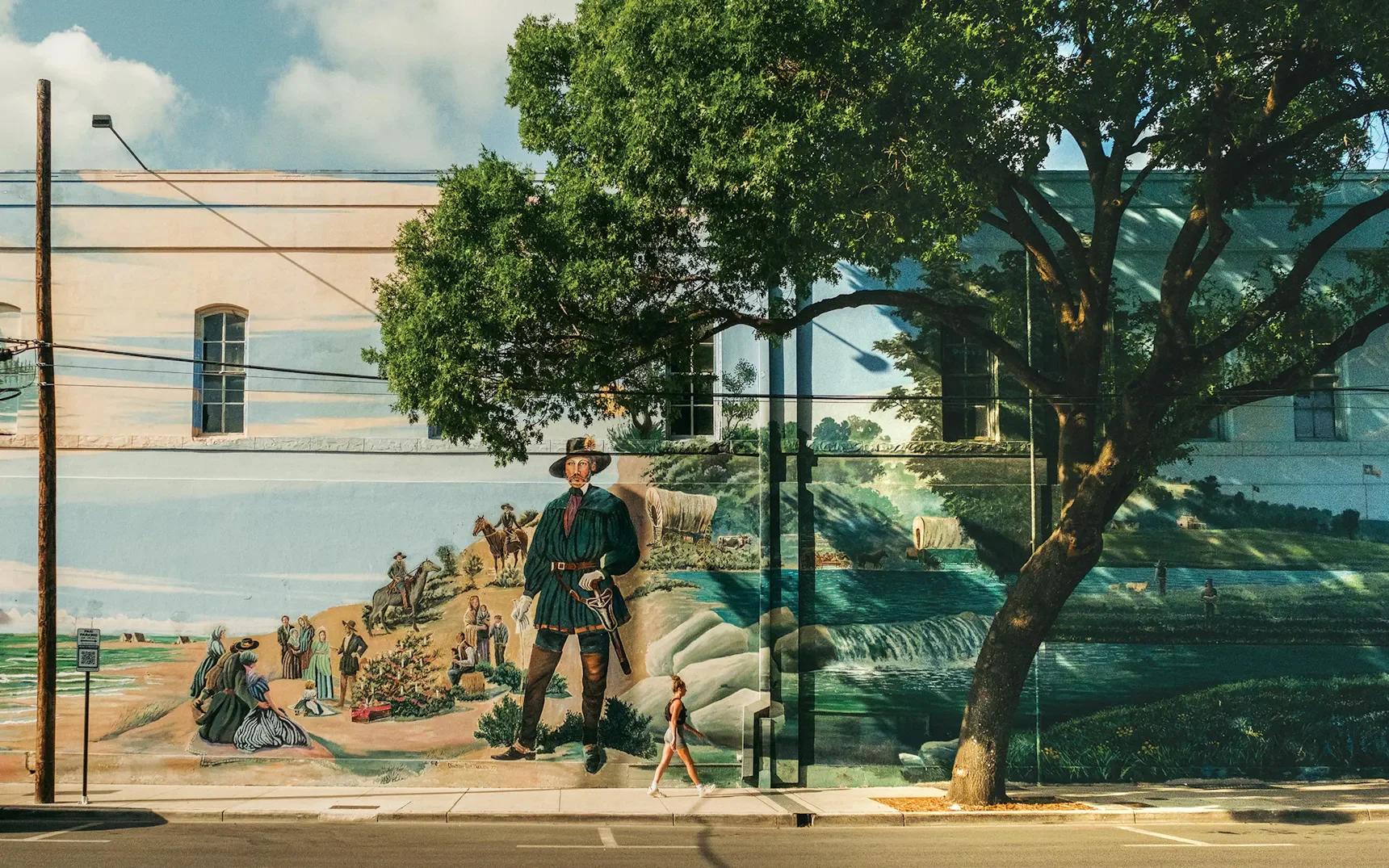
New Braunfels is one of the fastest-growing cities in the United States, and its cultural foundation — more than 250 years of Indigenous, German, Hispanic, and Texan heritage — is both its greatest asset and its greatest opportunity. Yet despite a rich history and genuine creative energy, the arts community has operated in fragments: organizations working in silos, artists without adequate space and resources to reach the broader community, and a cultural tourism economy that hasn’t reached far beyond river recreation and German-based heritage experiences. This plan exists because New Braunfels deserves a cultural future as distinctive as its past.

HOW

Through more than 1,200 community connection points, including public workshops, stakeholder conversations, pop-up events, and a digital survey, the planning team engaged with residents, artists, historians, educators, and city leaders to define what arts and culture mean to New Braunfels and what it would take to unlock the creative potential. That process surfaced six shared pillars for the plan: expanding creative spaces, strengthening visibility, connecting culture and tourism, encouraging collaboration, investing in belonging, and telling a cohesive story.

WHAT

This project serves as a comprehensive ten-year roadmap to bringing forth the cultural undercurrent of the community and unleashing the economic and social benefits of sustained cultural investment. This framework leverages strategic financial tools available to the City, establishes a governance framework for dedicated arts leadership, and provides policy and process guidance to support and empower cultural creators, non-profits, and creative entrepreneurs across the community.

Organized around four priority areas — Programming and Community Experiences, Places and Spaces, Visibility and Tourism, and Organizational Capacity — the plan charts short-, medium-, and long-term strategies to grow the cultural ecosystem, support the artists and organizations already doing the work, and position New Braunfels as a cultural anchor for the Texas Hill Country and a leader in arts investment.

Read More

Reimagining Columbus

Columbus, Ohio

WHY

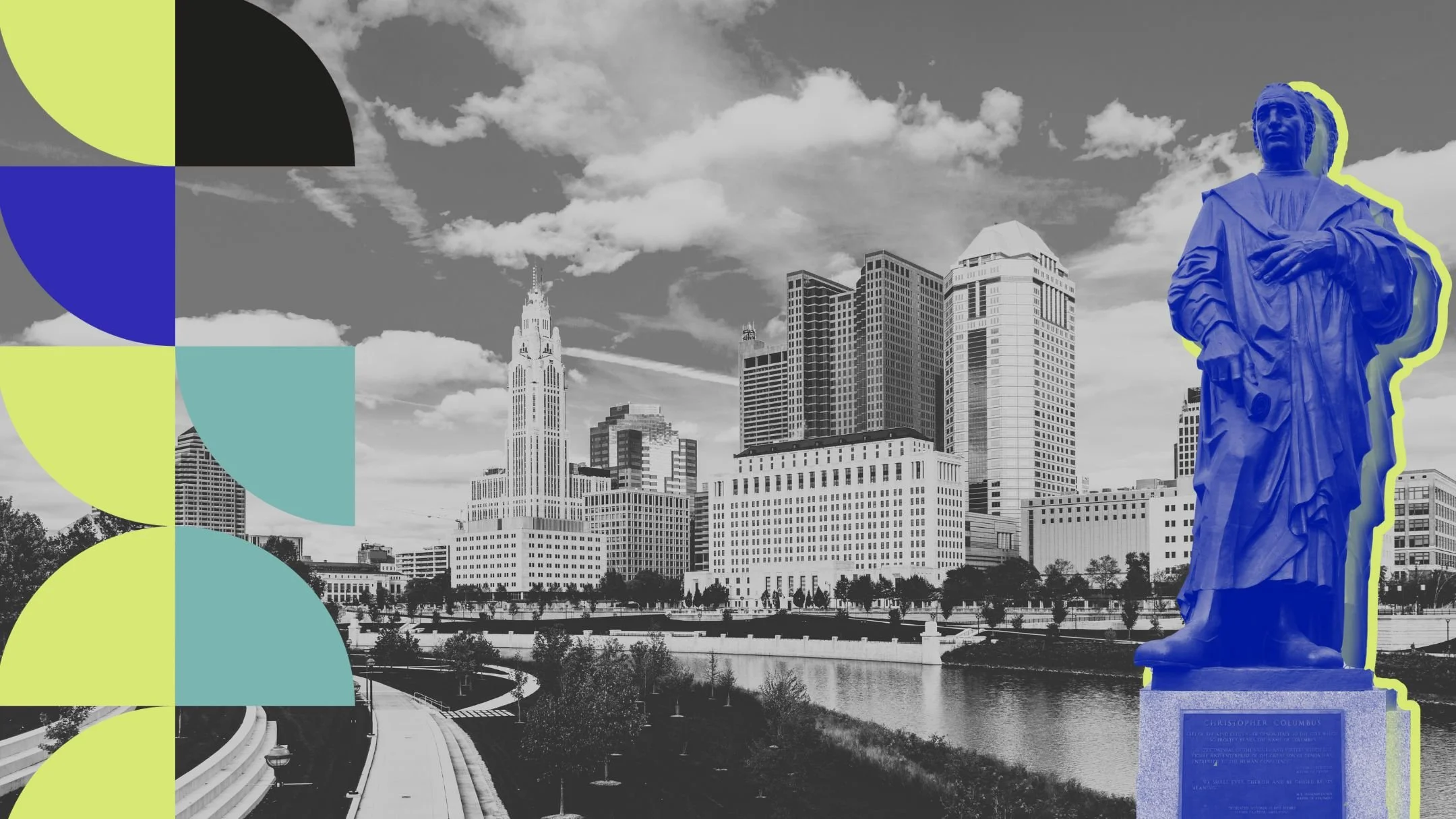
In the turbulent summer of 2020, when protests erupted over police brutality against people of color and controversial statues were being toppled and defaced nationwide, the City of Columbus preemptively removed its Christopher Columbus statue from the steps of City Hall. With the statue in storage, the City of Columbus partnered with Designing Local in 2023 to seek funding from the Mellon Foundation for “Reimagining Columbus,” a 2-year research, community engagement, and design process to reckon with the statue and imagine a future in which truths about its subject are more accurately conveyed. The proposal was awarded $2 million and Designing Local was tasked with managing the project.

HOW

Designing Local managed a multi-disciplinary team to undertake the following:

  • RESEARCH & LEARNING. In order to confidently recommend a course of action regarding the City of Columbus’ Christopher Columbus statue, the Reimagining Columbus project team felt it was important to be grounded in truths about the explorer and his legacies, particularly those within Columbus, Ohio. Learnings from subject matter experts, museums and site tours, original research, community conversations, and arts and culture colleagues nationwide were used to educate the public and inform project deliverables.

  • COMMUNITY ENGAGEMENT. In recognition that conversations about the Columbus statue would challenge participants — particularly those from the city’s Indigenous, Italian-American, and Black communities — the Reimagining Columbus engagement team planned a process that would accommodate their emotions about it but also forge a collective path forward. The team’s approach to this conversation utilized a customized, emotional safety–oriented methodology centered on Sankofa, the Ghanan idea that progress requires applying lessons from the past, to encourage more courageous sharing and evoke personal histories that could be influencing present-day perceptions. Large group and affinity group conversations, community events, and written feedback were employed in various ways throughout the process.   

  • DESIGN. The project’s design team worked to translate the learnings from research and community engagement into a design concept for a possible new Christopher Columbus statue placement. The team relied on Indigenous design principles to guide their vision for an immersive experience of nature and community togetherness at which visitors could experience the statue (or not), but also learn, play, restore themselves, and heal.

WHAT

Designing Local delivered the following Reimagining Columbus project outcomes: 

  • A website and StoryMap timeline, 2 research papers, 35 videos with more than 20 hours of educational content, and several in-person community learning exchanges provided context regarding Christopher Columbus, the statue of his likeness and public perceptions of it, and the city’s relationship with its namesake.

  • More than 20 community events and affinity group conversations elicited rich, layered feedback to help inform the design process. 

  • Conceptual designs of a new space in which to display and contextualize the statue, based on Indigenous design principles, translated research and community feedback into physical elements that could tell the story of Columbus — the city and the man — and help all visitors experience emotional safety in the space. So expansive did this vision become that the city, the Reimagining Columbus project team, and community members were inspired to embrace it as a generational vision for an altogether new type of public space in the city.

  • An art plan for City Hall campus suggested how new art could refresh and enliven this uninspiring civic space and ensure that it celebrates all city residents.

View the Project Outcomes Here

Read More
Public Art Planning, Community Engagement Designing Local Public Art Planning, Community Engagement Designing Local

Tempe Public Art Plan

Tempe, Arizona

WHY

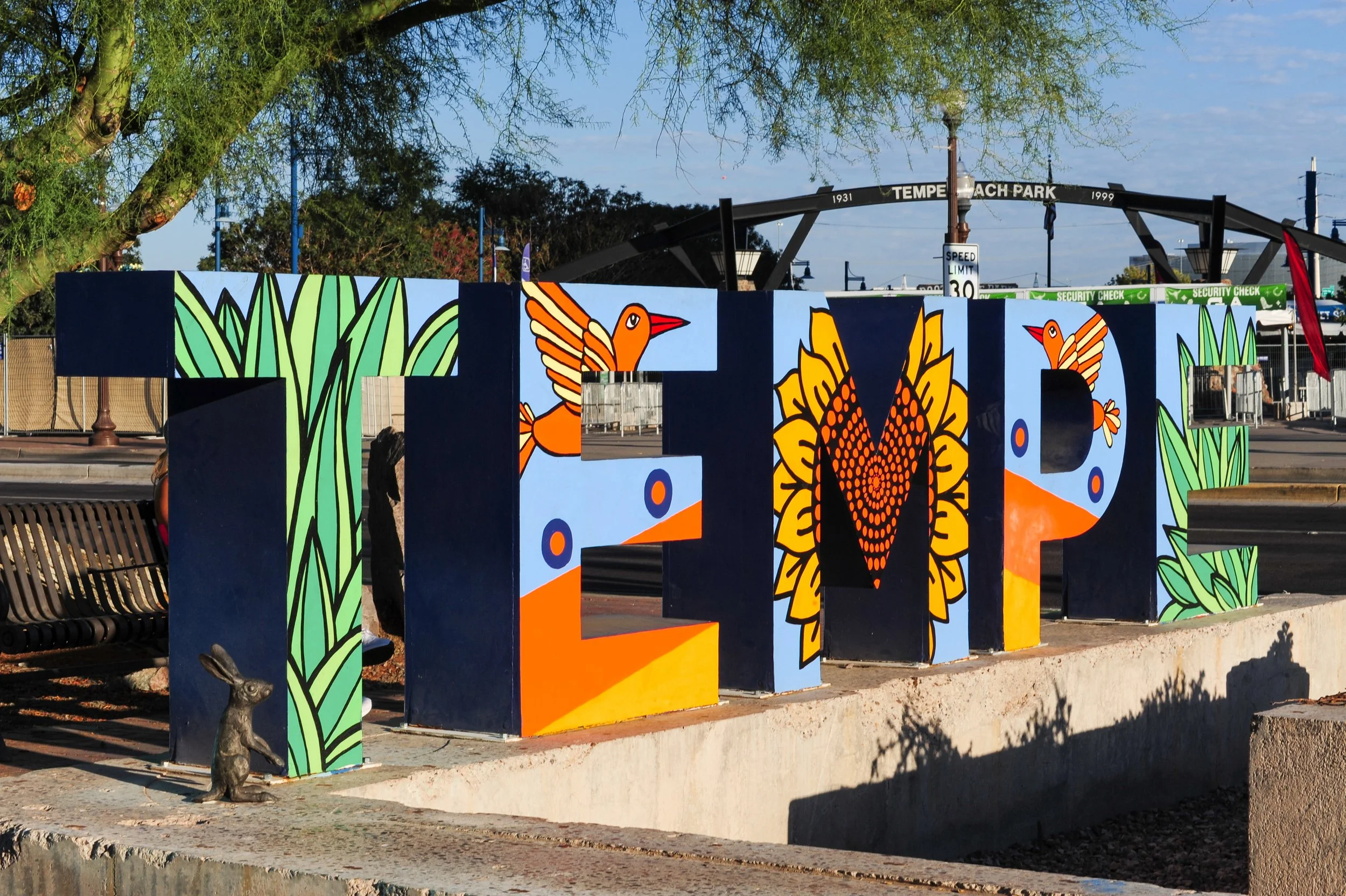
Tempe Public Art has grown significantly over nearly four decades, especially during a recent period of rapid city and regional development. Increased growth has brought more funding, expanded staff, and renewed public interest in integrating art into urban design and everyday life. As a result of this momentum, the City of Tempe is now poised to articulate a forward-looking vision for its public art program. A planning process was launched to engage the community, shape an aspirational vision for the program’s future, guide project decision-making and prioritization, and formalize policies and procedures.

HOW

Working alongside the Tempe Public Art team, Designing Local conducted an extensive public engagement process, offering more than 30 opportunities for involvement and engaging over 1,000 community members through both virtual and in-person methods such as surveys, meetings, focus groups, and public events. Community feedback emphasized creating a collection that reflects Tempe’s identity, supports local artists, promotes equitable access to resources and artwork, and incorporates interactive, diverse, and engaging art into everyday life.

WHAT

As Tempe Public Art enters a new phase of growth, its future vision builds on the program’s existing strengths while charting an inspirational path forward, shaped by input from community members, stakeholders, and staff. This plan will help to ensure long-term sustainability, increase innovation and impact, and maintain high-quality art citywide. Critical strategies include strengthening Tempe’s sense of place through public art in civic spaces and facilities, ensuring equitable geographic distribution, advancing signature projects, formalizing procedures, improving the Art in Private Development (AIPD) program, and enhancing collection management to maintain a robust, lasting public art collection.

Read More

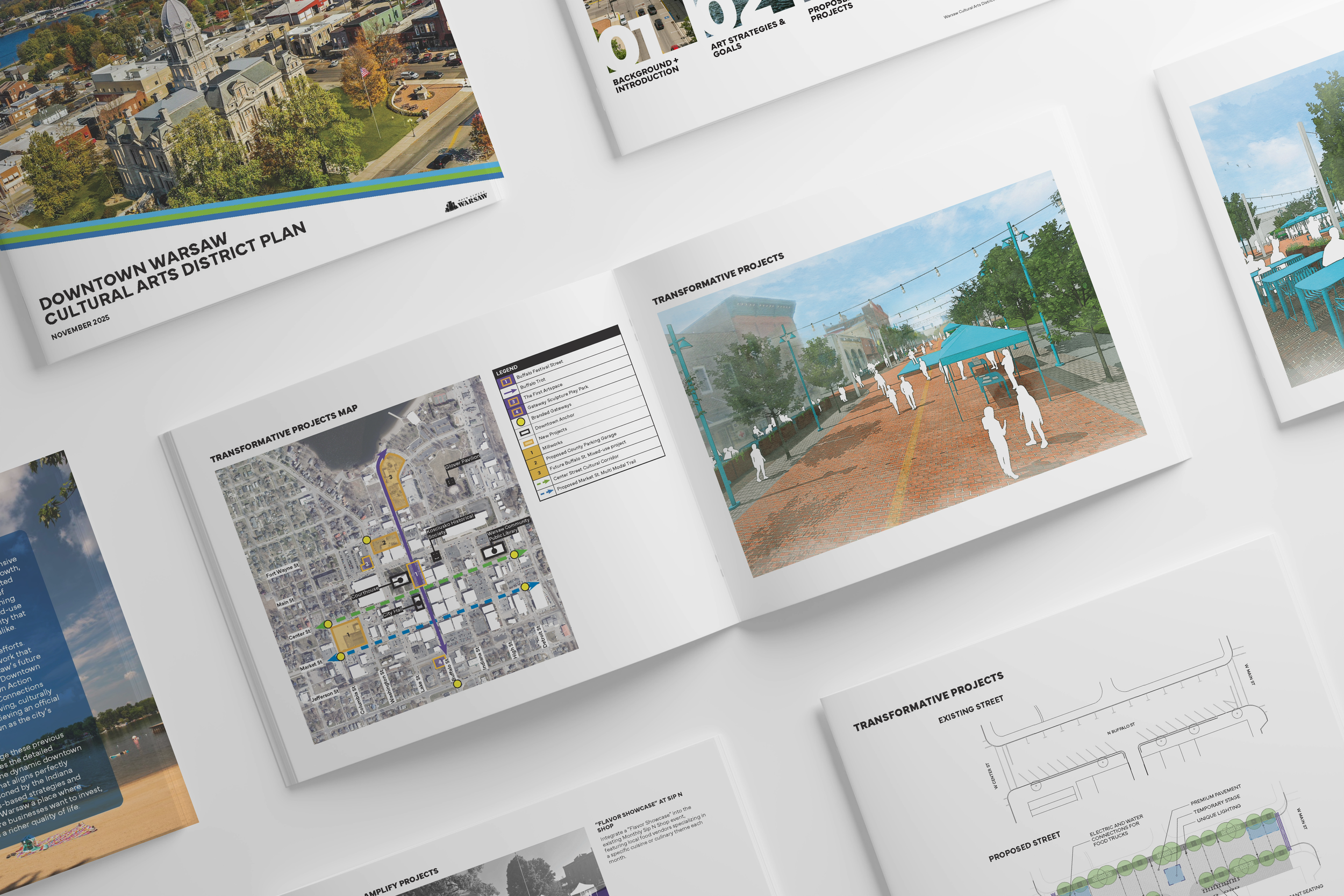
Downtown Warsaw Cultural Arts District Plan

Warsaw, Indiana

WHY

The Downtown Warsaw Cultural Arts District Plan serves as a comprehensive guide for leveraging the city’s cultural assets for sustained economic growth, with the ultimate goal of creating an Indiana Arts Commission-designated Indiana Cultural District. This plan is the necessary next step in a series of strategic efforts. It is built upon a solid foundation of recent, extensive strategic work that has consistently identified arts and culture as essential to Warsaw’s future economic vitality. Key previous planning efforts, including the Downtown Warsaw 2030 Strategic Plan, the Hyatt Palma 2023 Downtown Action Agenda, and the Brookings Institute/ LISC Critical Corridor Connections Plan, all established a clear mandate for a “vibrant and growing, culturally focused downtown”. These plans specifically called for achieving an official state cultural district, designation and solidifying downtown as the city’s “corporate, civic, and cultural center.”

HOW

The strategic heart of this plan is built from the ground up, developed through a multi-phased process of research, and rooted in extensive community engagement, to ensure authenticity. This was supported by detailed driveshed analysis to define the district’s economic potential and regional audience. This input was synthesized into a powerful vision for a culturally focused downtown that serves as an economic engine for the entire community, and will transform it into a vibrant, well-recognized, and labeled mixed-use cultural center. It features unique, authentic art and a cultural identity that makes the district memorable to visitors, residents and investors alike. 

To bring this vision to life, this plan posits a strategic framework based on three core principles- Activate, Beautify, and Connect-thus providing methodology for every project proposed in this plan.   

WHAT

Through strategy placemaking, downtown Warsaw’s Cultural Arts District will become a premier destination where a culturally rich and diverse scene serves as an economic engine-attracting investment, retaining top talent, and enriching the quality of life for the entire community.

Implementation of this plan is the critical step to leverage previous efforts and use the arts for economic growth. It provides detailed strategies for enhancing public spaces and creating the dynamic downtown experience envisioned by the community- a vision that aligns perfectly with the state’s focus on talent attraction as championed by the Indiana READI program. This document provides the needs-based strategies and placemaking recommendations required to make Warsaw a place where creative professionals want to live and work, where businesses want to invest, and where the entire community can experience a richer quality of life.

Read More

Burleson Public Art Plan

Burleson, Texas

WHY

This plan envisions Public Art as a transformative force that will enrich the city of Burleson, Texas, serving as a constant source of discovery, beautification, fostering civic pride, inviting dialogue, and transforming locales into inspiring places that tell the community’s story- past, present, and aspirations. By integrating art into public spaces, the city aims to spark curiosity, strengthen connection, and create memorable landmarks that reflect the city’s unique character and celebrate community spirit. 

The vision for Public Art in Burleson centers on celebrating the city’s unique identity, history, agricultural roots, and evolving culture. It aims to create accessible, educational, and interactive art that encourages outdoor engagement and reflects the community’s diversity across generations and backgrounds. The plan seeks to tell Burleson’s story through poignant, impactful works that honor people and history whilst also positioning the city as an arts destination.

Public Art is a critical factor to building a unique sense of place, as well as yielding extensive social, cultural and economic benefits for a community. The vision outlined in this plan aligns with broader priorities of Burleson, including public art policy development, donation procedures, governance structure, and the identification of success metrics to support program development. 

HOW

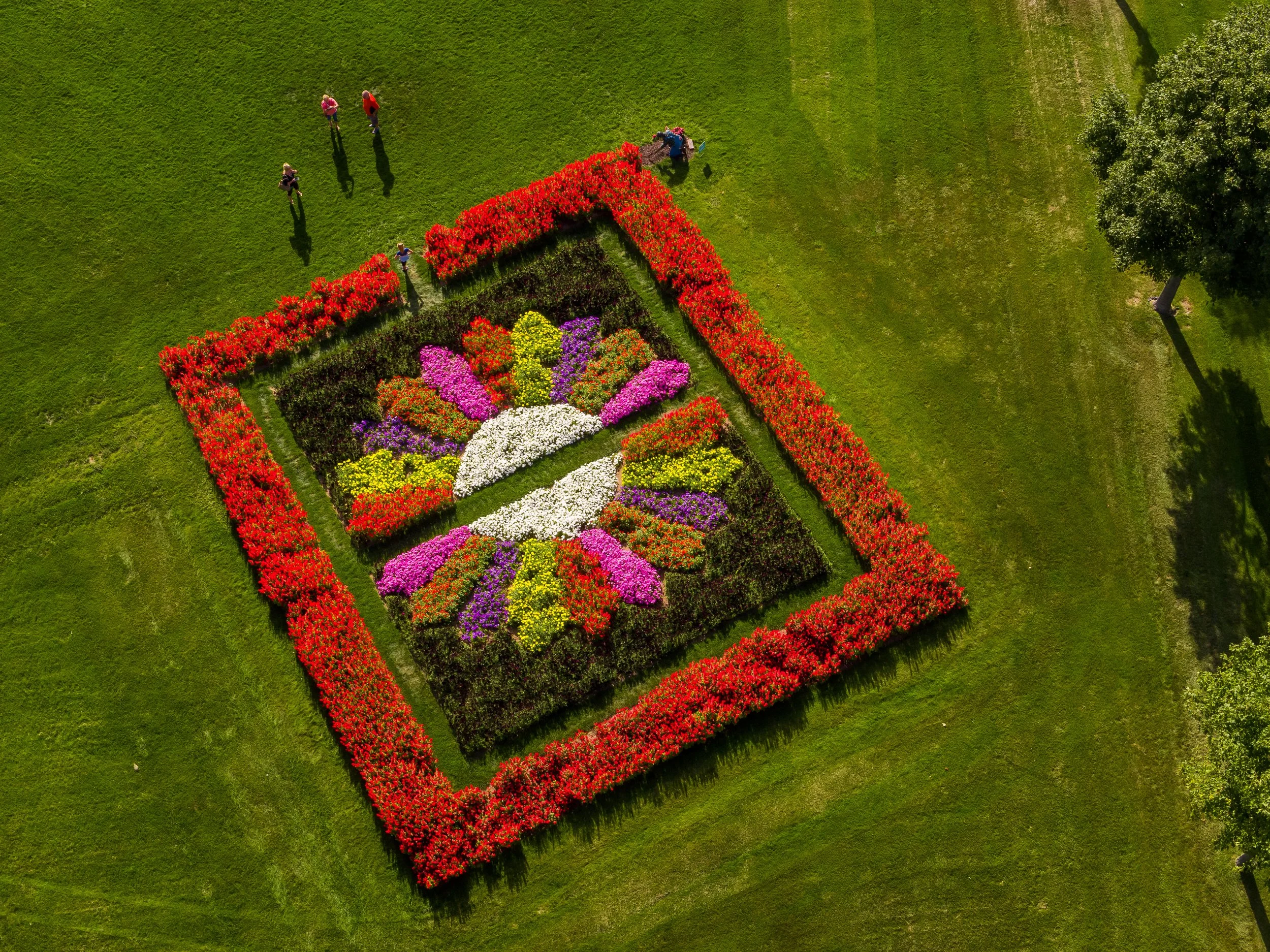
Throughout the Public Art Plan process, and with our curation and coordination services, a team of local artists created a series of artworks in partnership with Russell Art Farm that honor the timeless tradition of quilting in the US. These artworks include a series of eight Barn Quilts, slated for temporary rotating display in schools across Burleson as the city’s first temporary public art exhibition. In conjunction with the barn quilts, a traditional quilt was crafted that reflects icons and landmarks of the Burleson community. This quilt is now on display in the City of Burleson’s interior collection at City Hall.  

The City of Burleson is also committed to regularly evaluating progress toward its public art, economic development, and community vitality goals. Through continuous review and community engagement, the City will remain responsive, innovative, and dedicated to maintaining Burleson as a vibrant, safe, and inclusive place for all.

WHAT

The Plan champions for Burleson to become a community where Public Art is innovative, diverse, and accessible to create vibrant public spaces and meaningful connections. Through community engagement and survey results, respondents frequently identified sculptural art, functional art, and murals as their preferred art typologies. There was also a clear desire for public art to positively impact and enhance the beauty of surrounding public spaces and streets. The successful implementation of this Plan will harness Public Art to build Burleson’s collective identity, establish community values, transform their public spaces to be more engaging and accessible, connecting people, ideas, and places, thus drawing more people to the city and subsequently boosting the local economy.

Read More
Public Art Planning Designing Local Public Art Planning Designing Local

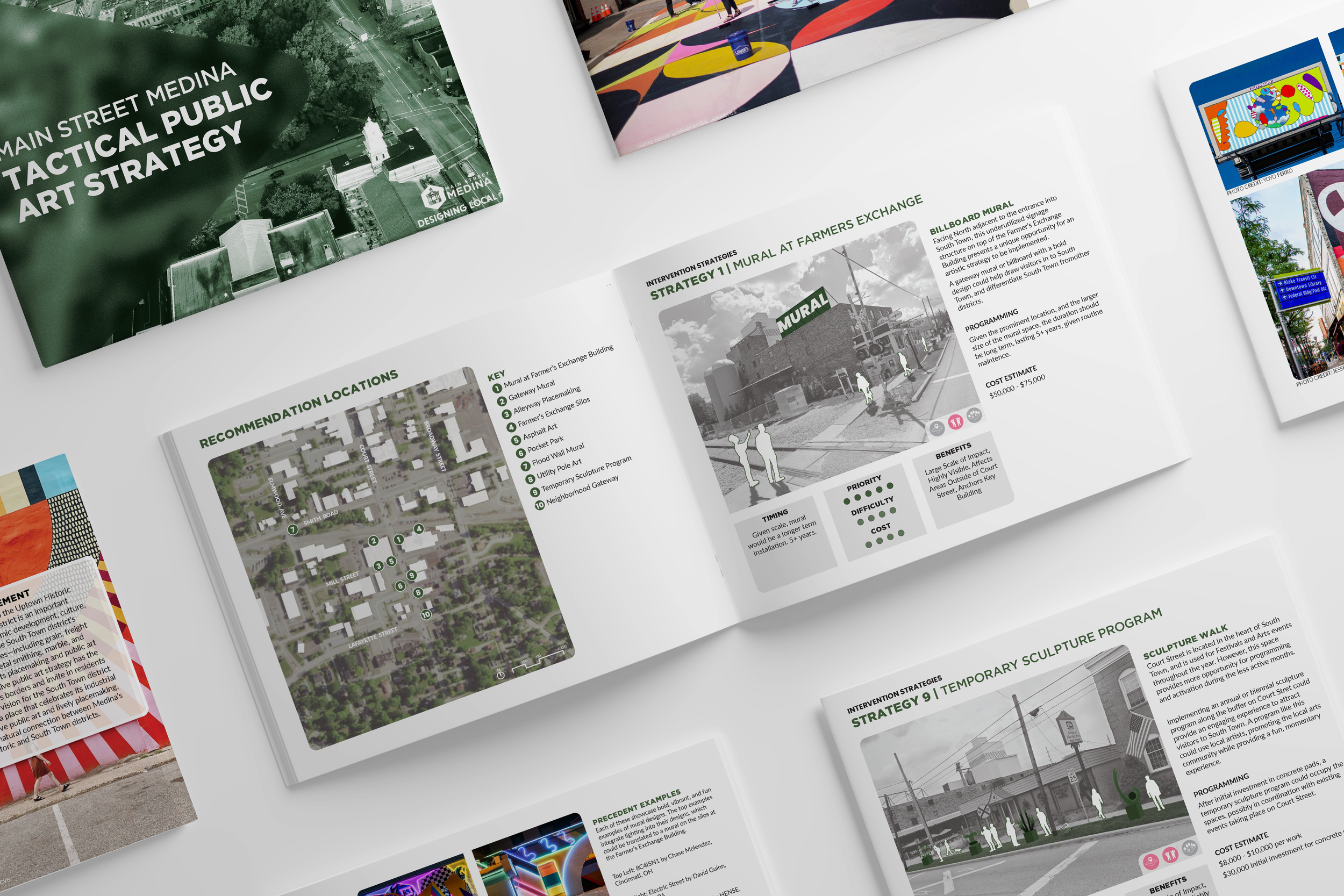
Main Street Medina Tactical Public Art Strategy

Medina, Ohio

WHY

As the southern gateway into the Uptown Historic district, the South Town district in Medina serves as an important crossroads for tourism, economic development, culture, and community pride. The South Town district's history in multiple industries-including grain, freight railways, upholstery, metal smithing, marble, and beyond-contextualizes its placemaking and public art considerations. A cohesive public art strategy has the ability to define a place's borders and invite in residents and visitors.

HOW

Designing Local created a vision for the South Town district of Medina that celebrates its industrial past through innovative public art and lively placemaking, while establishing a natural connection between Medina's Uptown Historic and South Town districts.

WHAT

In order to most effectively implement goals defined in the first phase of this strategic plan, a framework of three approaches was developed. Each dynamic approach supports the goals of public art in South Town: activating shared spaces, revealing South Town's visual identity, and reinforcing the Court Street Corridor. While the recommended interventions are all achievable as stand-alone projects, their implementation will be more successful when aligned with this Plan's strategic approaches.

Read More