Westerville Wayfinding Strategy
Westerville, Ohio
WHY
This plan supports an initiative to improve wayfinding across the City of Westerville’s trail network, building on a previously completed Trail Audit of 19 regional and local trails. The strategy aims to ensure that residents and visitors can confidently navigate the system, identify trails, and easily access local amenities and destinations. As Westerville includes several regional trails, the plan aligns with the Central Ohio Greenways (COG) Wayfinding Strategy Guide to ensure consistency within the broader regional network.
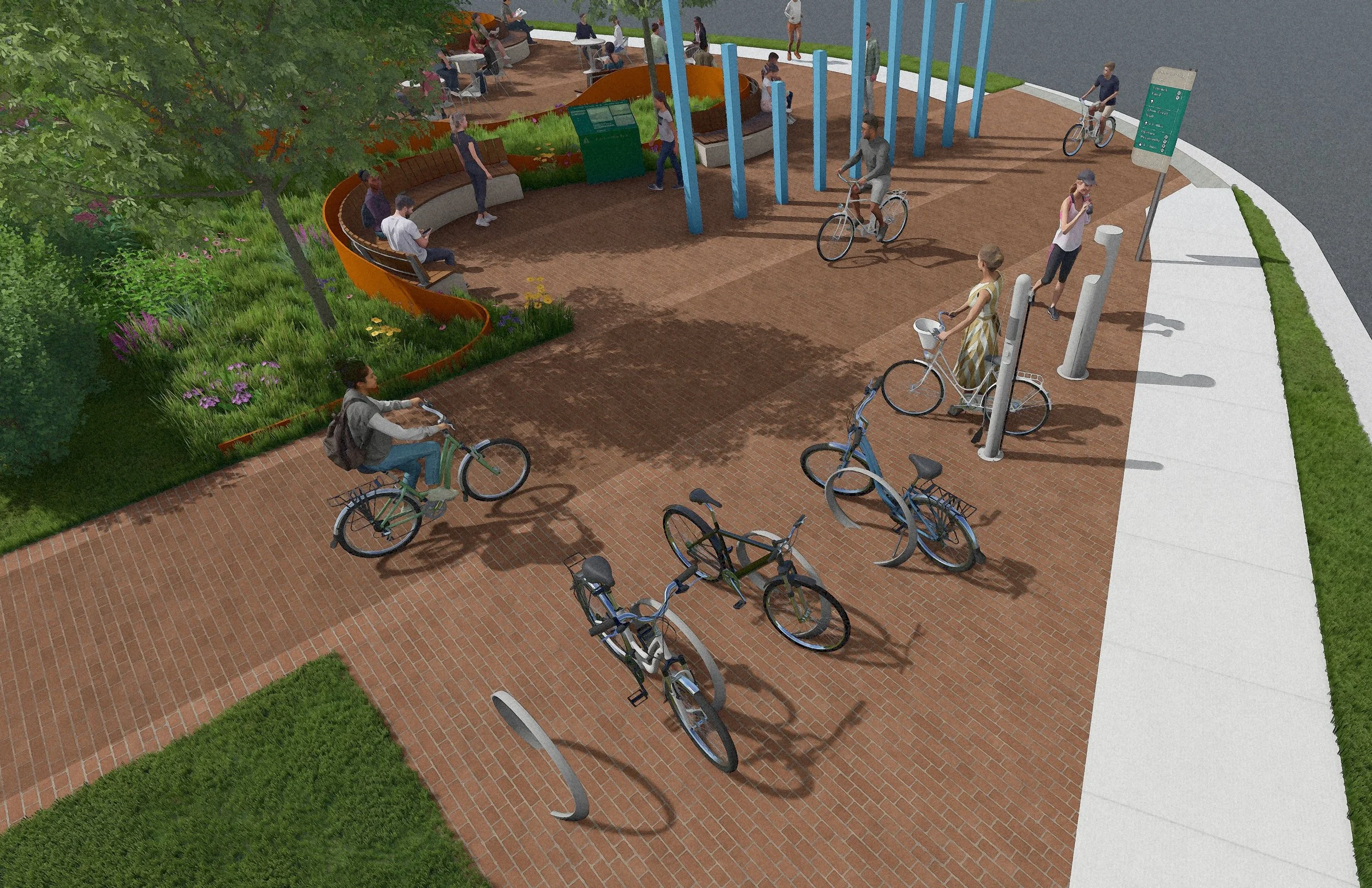
In addition to maps and signage, the plan emphasizes placemaking, public art, and other creative features that enhance trail identity, improve navigation, and create memorable user experiences. With 13 existing creative elements already located along the Central Ohio section of the Ohio to Erie Trail, Westerville has an opportunity to expand this collection. The plan also includes a demonstration site illustrating how public art and placemaking can create engaging destination for the Westerville community and trail users.
HOW
The project began with an analysis of Westerville’s existing trail system that identified local destinations, trail access points, and trailhead amenities to establish a list of assets to be featured on the wayfinding signage. These assets included key amenities for trail users, business districts and commercial resources, local landmarks, and trail access points.
WHAT
After identifying key amenities to highlight, sign design guidelines were developed based on the existing Westerville sign package and the COG Wayfinding Strategy Guide. The guidelines create a cohesive system for both local and regional trails across Westerville and Central Ohio, while allowing subtle distinctions between trail types. Proposed sign types and placement typologies were designed to support clear navigation, with detailed sign charts, trail maps, and cost estimates included in the plan.
The demonstration site design illustrates a placemaking concept for the Electric Mini Park, an area along the Ohio to Erie Trail that would benefit from improved wayfinding. The design reimagines the space as a welcoming plaza that uses public art for wayfinding. Conceptual renderings and a preliminary plant palette show how public art, specialty paving, seating, and enhanced landscaping can create a space that both highlights the trail and encourages community gathering.